
.avif)

A sales playbook sounds like something only large organizations need, but it’s actually one of the most practical tools any sales team can build. If your sales process feels inconsistent or difficult to scale, creating a playbook brings structure, clarity, and repeatability to how your team wins deals.
What is a sales playbook?
A sales playbook is a structured guide that outlines how your team sells. It documents your strategies, processes, messaging, and best practices so that anyone on the team can follow a proven approach to close more deals. Instead of relying on individual habits or guesswork, a playbook creates a shared system for success.
Why you need one
Without a playbook, sales efforts tend to vary from person to person, which makes results unpredictable and harder to improve. A well-developed playbook creates consistency across your team, helps new hires ramp faster, and ensures that your most effective tactics are used more often. It also makes it easier to refine your approach over time because your process is clearly defined.
How to create a sales playbook
The process of building a sales playbook does not need to be overly complex. It is more important to start with a clear foundation and refine it as you learn what works.
The first step is defining your ideal customer. This means identifying the industries, company sizes, and roles that benefit most from your product or service. It also includes understanding the problems they are trying to solve and who is involved in the decision-making process. When this is clearly documented, your team can focus their energy on the highest-value opportunities.
Next, map out your sales process from start to finish. This includes each stage a deal moves through, from initial outreach to closing and follow-up. Instead of just naming stages, describe what needs to happen in each one and what qualifies a prospect to move forward. This creates alignment across your team and reduces confusion.
Once your process is defined, document your messaging. This includes how you explain your product, the core value you provide, and how you differentiate from competitors. It should also address common objections and provide guidance on how to respond to them. Consistent messaging is especially important in presentations, where clarity and structure can make or break a deal.
It is also important to define how success is measured. This includes the key metrics that indicate whether your sales process is working, such as how deals progress through stages or how long it takes to close. Clear metrics help your team understand expectations and make it easier to identify areas for improvement.
Finally, your playbook should include guidance on the tools your team uses and how they support the sales process. Whether it is your CRM, communication tools, or presentation software like Beautiful.ai, documenting how these tools fit into your workflow ensures that your team uses them effectively rather than inconsistently.
Leveraging Beautiful.ai’s AI presentation maker to streamline your sales playbook
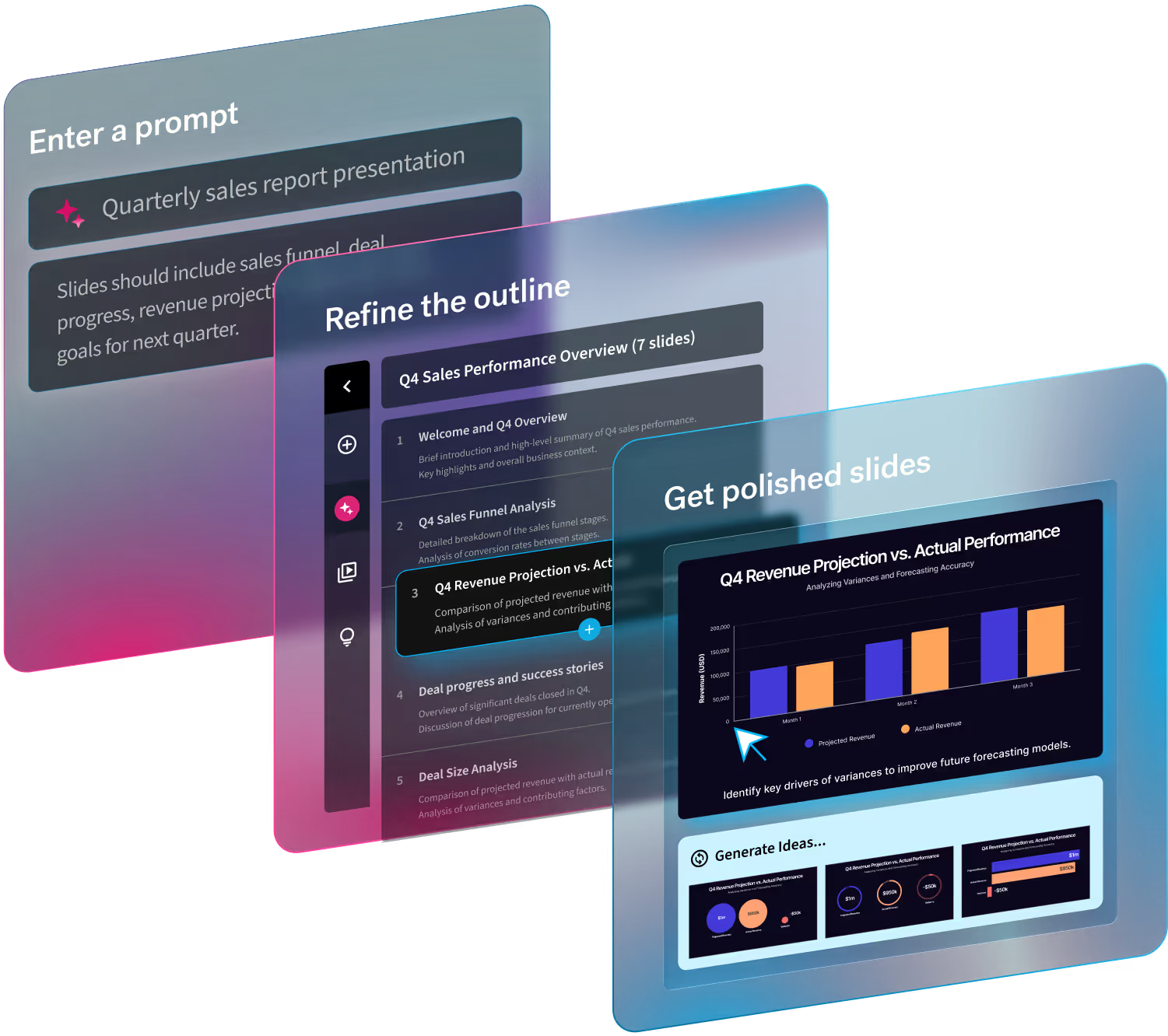
This is where tools like Beautiful.ai become especially valuable. A sales playbook is not just a static document—it’s a living resource that adapts as products and offerings change, teams grow, and sales strategies pivot. Using Beautiful.ai allows teams to quickly access the playbook while onboarding, before a sales call, or if they get stuck mid-deal. Because Beautiful.ai lives in the cloud, the presentation will always be up to date with the most current messaging.
A sales playbook presentation should act as a source of truth for sales teams. They can use information from the sales playbook to craft their pitch and help build out their own sales pitch deck for prospects. Team leaders can turn specific slides into approved, Shared Slides that can be copied and repurposed in client-facing decks to keep distributed teams aligned and on-brand. Instead of recreating slides from scratch, reps can rely on standardized templates that reflect the playbook and keep everything consistent.
As your team gains experience and your market evolves, your playbook should be updated to reflect what actually works. Over time, it becomes an evolving resource that not only guides your sales efforts but continuously improves them.




.avif)
.avif)
