.gif)
.gif)

AI adoption isn’t the same as AI maturity
By now, nearly every team can say they're using AI. But that's a low bar. That's because AI adoption and AI maturity aren't the same thing.
One person might use a chatbot to rewrite slide copy. Another generates an entire presentation from a prompt. On paper, both are "using AI," but they're getting dramatically different outcomes.
Think about digital transformation or data maturity. Organizations didn't become digitally mature the moment they bought new software. They matured by building repeatable processes, establishing standards, and giving teams the tools and training to succeed. AI follows the same path.
Presentation creation is a perfect example. At one end of the spectrum, AI is an occasional shortcut for drafting content. At the other, it's embedded into the way teams build, refine, and share presentations, freeing people from repetitive work so they can focus on storytelling, strategy, and decision-making.
We broke down AI maturity into five levels to help you identify where your team is today, what challenges are holding you back, and what it will take to move forward with presentation creation.
Level 1: Ad hoc experimentation
Employees occasionally open an AI tool when they need help brainstorming, rewriting a paragraph, or answering a question. Everyone experiments differently, with little guidance or consistency. Prompting is largely trial and error, and success depends on the individual's comfort with the technology.
This stage has an important advantage: curiosity. Teams begin exploring what's possible without rigid expectations, allowing employees to develop confidence at their own pace.
The downside is inconsistency. Two people tackling the same presentation may produce completely different results, and there's no repeatable process that others can learn from or improve.
How to move to Level 2: Encourage safe experimentation. Give employees permission to test different AI tools, compare results, and share what they've learned. The goal isn't perfection, it's building familiarity and confidence.
Level 2: Assisted creation
AI becomes part of the presentation workflow instead of an occasional experiment. People use it to draft outlines, rewrite slide content, summarize documents, or adapt existing material for different audiences. Time savings start to become noticeable, and adoption spreads across the team.
However, every person still has their own way of working. One employee writes detailed prompts, another relies on vague, one-line requests, while someone else copies content between multiple AI tools. Results vary widely, and editing often takes almost as long as creating the first draft. Without shared standards, teams struggle to scale what works.
How to move to Level 3: Introduce repeatable workflows. Share successful prompts, document best practices, and create reusable presentation templates. Tools like Beautiful.ai's with strict design guardrails and team resources help ensure employees aren't reinventing the wheel every time they build a deck.
Level 3: Structured workflows
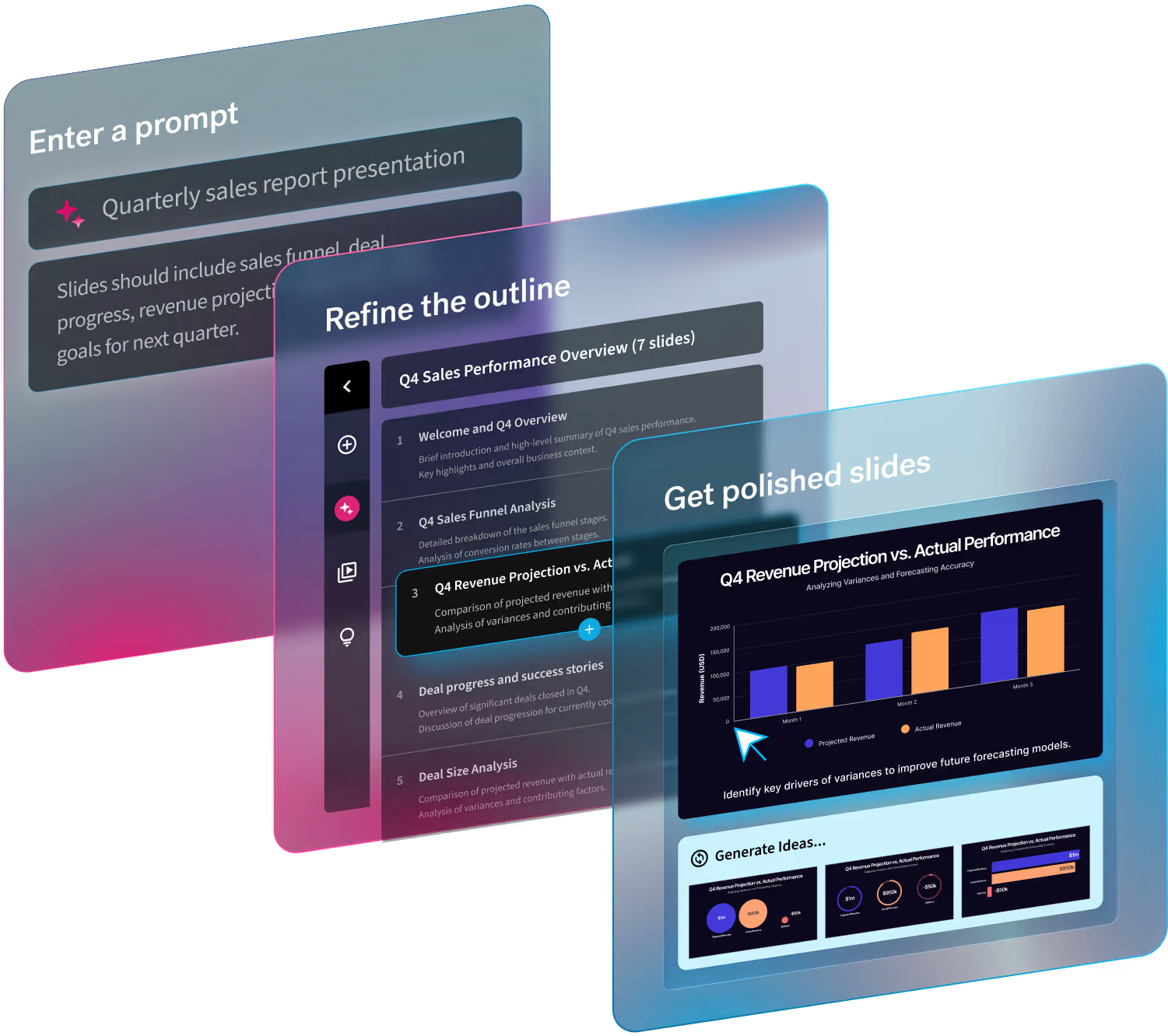
Instead of jumping straight into content generation, teams follow a defined workflow. For instance, starting with an outline, refining messaging with AI, and then building the presentation. Prompt templates emerge for common tasks, and colleagues begin sharing techniques that consistently produce better results.
The payoff is noticeable. Presentations are created faster, baseline quality improves, and employees spend less time on repetitive drafting and formatting. AI becomes a productivity tool rather than a novelty.
But progress still depends heavily on individual skill. Without formal training or leadership support, some employees continue to outperform others simply because they've invested more time learning AI on their own. Teams also have little visibility into whether their processes are actually improving outcomes.
How to move to Level 4: Standardize AI across the team. Provide training, establish clear guidelines for responsible AI use, and create reusable assets everyone can access. In Beautiful.ai, shared Brand Kits ensure every presentation stays on brand, while Team Slides create a single source of truth for frequently used content like company messaging, product information, and business metrics.
Level 4: Systemized and scalable
AI is no longer an individual productivity hack, it's part of how the team operates. Employees work from shared templates, approved prompts, and centralized slide libraries instead of creating everything from scratch. New hires are onboarded into established workflows, making it easier to produce consistent presentations regardless of experience level.
The benefits extend beyond efficiency. Brand consistency improves, review cycles become shorter, and collaboration becomes much smoother because everyone is working from the same foundation. Rather than debating formatting or rebuilding existing slides, teams spend more time refining the story they're trying to tell.
Reaching this level does require ongoing investment. Templates need updating, AI best practices evolve, and leadership must ensure standards remain aligned across departments instead of becoming isolated within individual teams.
How to move to Level 5: Start measuring outcomes, not just adoption. The goal isn't to maximize AI usage, it's to maximize business impact. Track metrics like presentation turnaround time, quality, content reuse, and business results to understand where AI is creating the greatest value and where workflows can continue to improve.
Level 5: Optimized and adaptive
At the highest level, organizations treat AI as infrastructure rather than a standalone tool. Teams continuously refine their workflows based on feedback and business needs. They measure meaningful outcomes instead of counting prompts or tokens. As new capabilities emerge, processes evolve alongside them without disrupting the way people work.
This creates a powerful competitive advantage. Presentation creation becomes faster, quality remains consistently high, and employees spend far more of their time on strategic thinking than repetitive production work.
Reaching this level isn't about chasing the newest AI feature. It's about building systems that help people do their best work consistently. AI handles execution where it adds value, while humans remain responsible for judgment, creativity, and communication.
Take back your time with AI
When repetitive work like drafting, formatting, and applying brand standards is handled by AI, presentation creators can spend more time on the work that actually moves the needle: refining their message, tailoring content to their audience, and building a stronger narrative.
That's why the most mature organizations don't measure success by how often employees use AI. They measure whether teams are producing better presentations in less time, collaborating more effectively, and communicating more consistently across the business.
Purpose-built presentation platforms make this shift easier to achieve. Beautiful.ai combines AI-assisted content creation with Smart Slides, shared Brand Kits, and centralized Team Slides so teams can build polished, on-brand presentations without sacrificing speed or consistency. Instead of starting from a blank slide, or fixing formatting after the fact, teams can focus on the ideas they're trying to communicate.
Ultimately, AI should strengthen your presentation process, not replace it. The best presentations still require human judgment, strategic thinking, and storytelling. AI simply removes the friction that gets in the way.
Start leveling up today
Most organizations are earlier in the AI maturity curve than they realize, and that's okay. The goal isn't to jump from occasional AI use to a fully optimized workflow overnight. Like any organizational capability, maturity develops one step at a time.
Every improvement, whether it's sharing successful prompts, introducing team templates, or standardizing workflows, creates momentum for the next.
By combining the right technology with shared workflows, training, and human oversight, AI becomes more than a productivity boost. It becomes part of the infrastructure that helps every presentation, and every presenter performs at a higher level.
If you're ready to improve how your team builds presentations, Beautiful.ai's Create with AI Workflow helps turn fragmented AI usage into a repeatable, scalable process. Try it free for 14 days.

.avif)