.avif)

Based on Beautiful.ai’s annual survey findings, artificial intelligence in the workplace still felt experimental in 2025. Managers were exploring tools, piloting use cases, and cautiously evaluating outputs. There was curiosity, but also skepticism.
In 2026, that ambiguity is gone.
AI is no longer an experiment inside American organizations. It is embedded in workflows, regularly used, and increasingly trusted to perform at a professional level. But as confidence in the technology has risen, so has concern around job security.
Beautiful.ai’s third annual survey of 3,000 American managers reveals a workplace at an inflection point. Trust in AI’s capabilities is accelerating at the same time that fear—particularly around job security and wages—is becoming mainstream.
This year’s findings tell a clear story: capability is accelerating, usage is becoming routine, and anxiety is rising alongside both.
AI adoption is being driven first and foremost by the need to work faster and more efficiently, not by a primary desire to reduce headcount. Despite this reality, while AI capability and usage is increasing, concerns about displacement and compensation pressure are intensifying alongside that growth. These forces are unfolding simultaneously, reshaping how managers think about work itself.
Summary of Key Findings
- 40% of managers said the primary reason they’re adopting AI tools in 2026 is to streamline work and improve efficiency, while 37% said it’s to enhance worker productivity. Only 9% said the primary goal is to downsize and save money on worker salaries.
- 72% of managers said they believe employees fear AI tools will make them less valuable at work, an 8 percentage point increase from 2025.
- 70% of managers said they believe employees fear AI tools will eventually lead to them being fired, a 12% increase from 2025.
- 35% of managers said they agree that replacing employees with AI tools is a good thing for their company and they hope it happens more in 2026, compared to only 23% in 2025. Another 23% are undecided.
- 42% of managers—up 12% from 2025— said they agree it would be financially beneficial to replace a large number of employees with AI tools in 2026, while 37% disagree and 21% are undecided.
- 16% more managers (37%) said they agree that multiple people they currently manage could be replaced by AI tools and their team would be fine in 2026 compared to 2025, while 43% disagree and 20% are undecided.
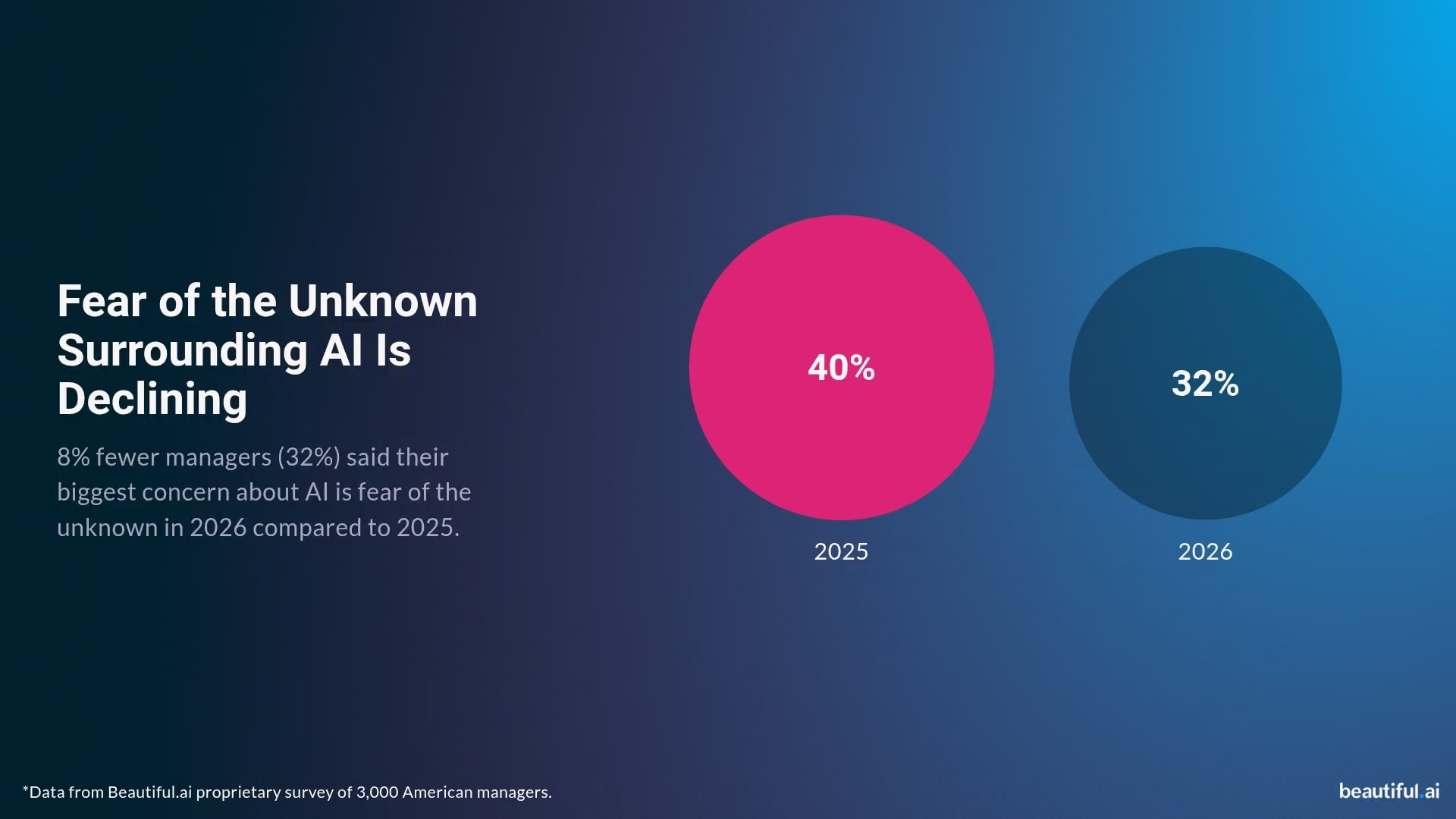
- 32% of managers said their biggest concern about AI is fear of the unknown, an 8% decrease from last year. While 28% said their biggest concern is employee resistance to AI leading to disengaged and unhappy coworkers.
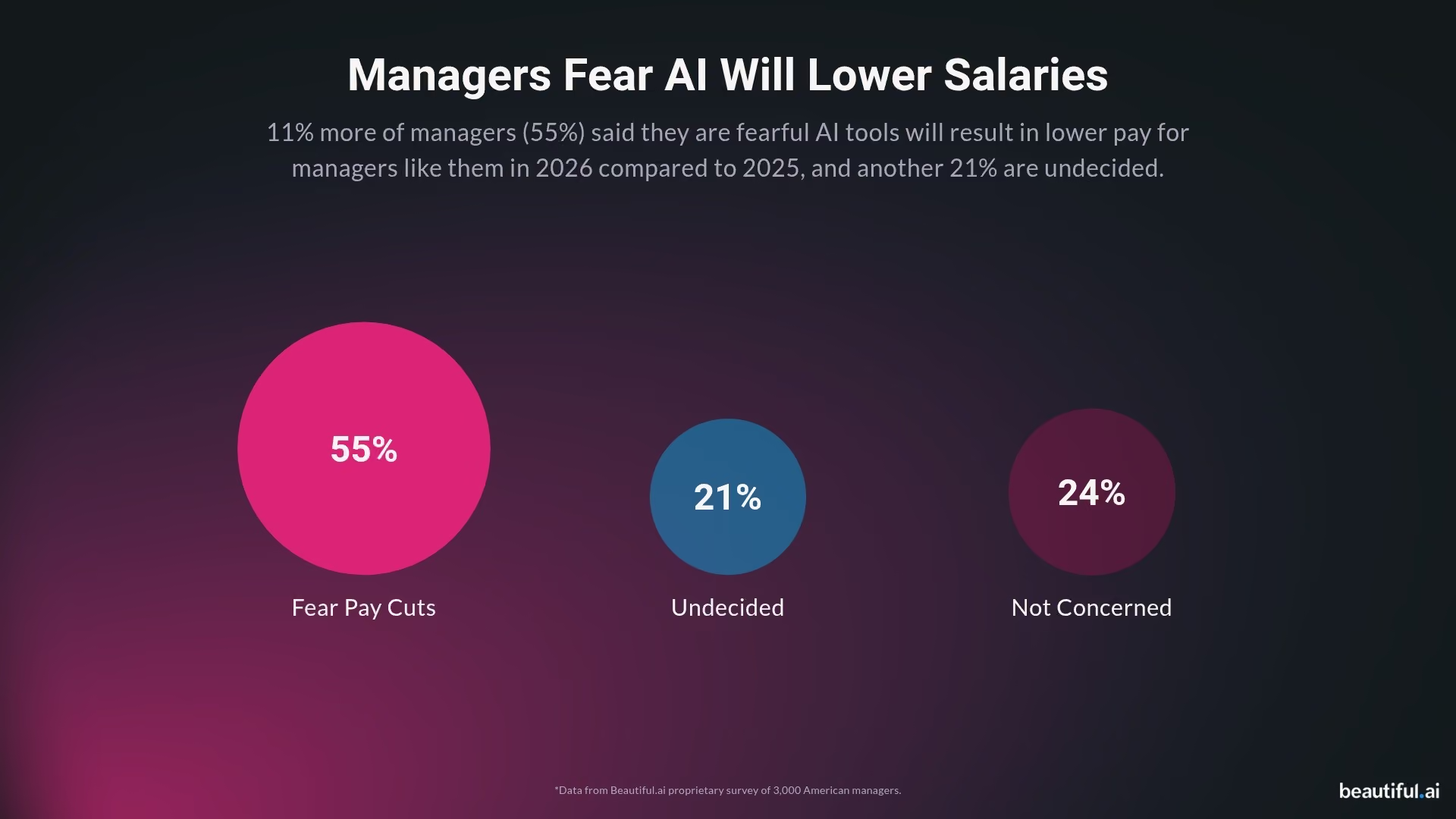
- 11% more of managers (55%) said they are fearful AI tools will result in lower pay for managers like them in 2026 compared to 2025, and another 21% are undecided.
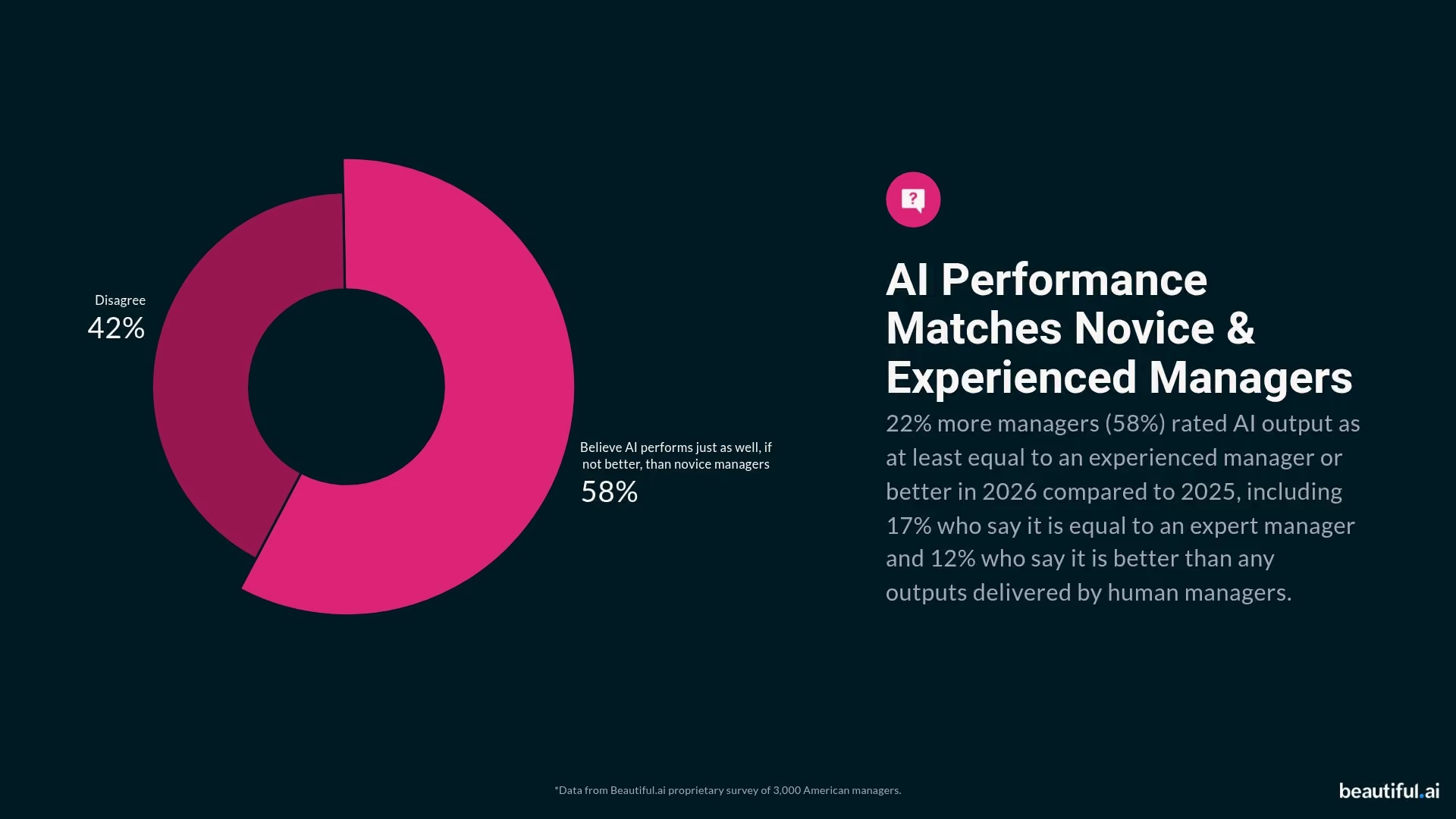
- 58% of managers rated AI’s output as at least equal to an experienced manager or better, including 17% who say it’s equal to an expert manager and 12% who say it’s better than any outputs delivered by human managers. A 22% increase in confidence in AI’s capabilities compared to 2025.
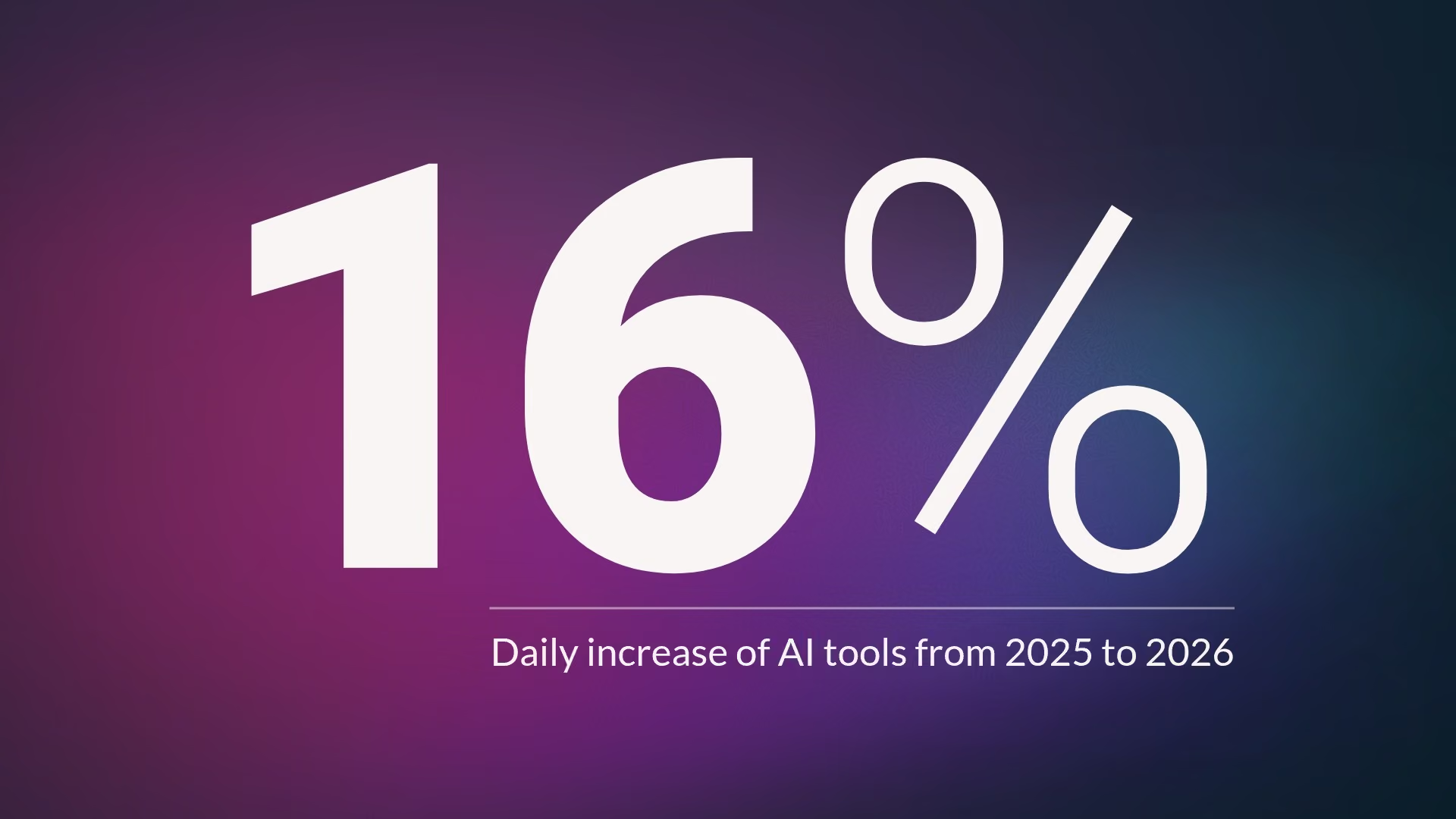
- Daily increase of AI tools has increased 16% from 2025 to 2026
- 72% of managers say they’re using AI to help manage employees at least weekly in 2026.
A shift from productivity tool to structural consideration
Managers continue to frame AI adoption primarily in terms of performance improvement. In 2026, the majority of managers say the main reason they are adopting AI tools is to streamline work, improve efficiency, and enhance worker productivity. Only 9% identify downsizing and saving on salaries as the primary driver.
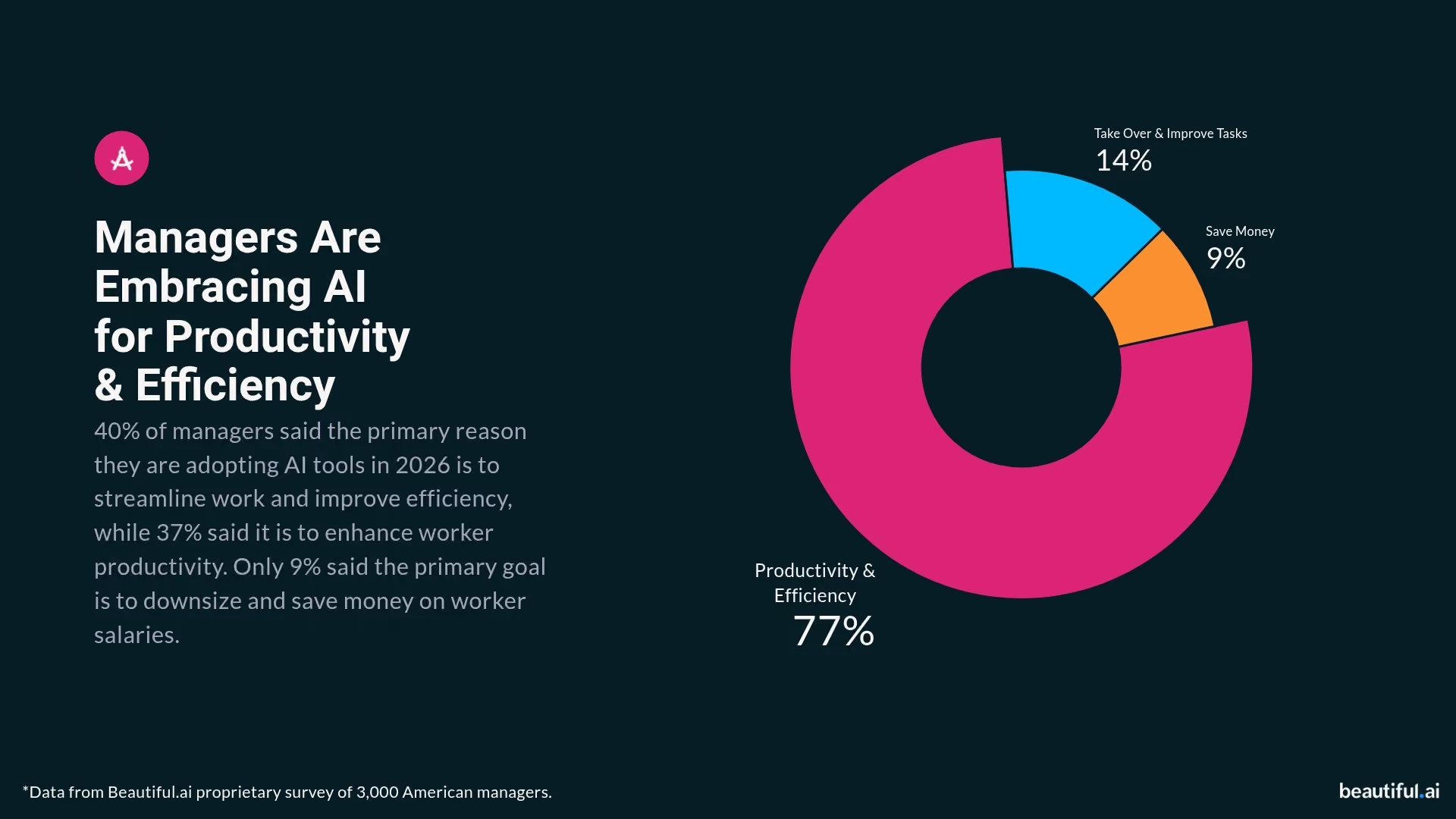
This reinforces a key theme across this year’s data. The overwhelming majority of managers are focused on efficiency and output improvement. As efficiency gains compound, they begin to outpace how organizations have historically structured roles and teams.
This evolution in thinking is subtle but profound. Downsizing is not the reason for adoption, yet as AI output improves and reliability increases, more managers are beginning to view workforce reduction as economically viable.
That marks a structural shift in how AI is perceived—not merely as software, but as a tool that greatly improves workplace output.
From innovation to workplace standard
Usage data confirms that AI is now embedded in day-to-day management. Daily use of AI tools among managers has increased by 16% year over year, rising from 18% to 34%. Seventy-two percent report using AI at least weekly to help manage employees.
This level of engagement signals that AI has moved beyond optional experimentation. It is part of operational infrastructure.
As a result, efficiency is no longer a competitive advantage—it is becoming a baseline expectation.
Interestingly, governance is still catching up. Fifty-three percent of managers say they use only AI tools officially approved by their employer, while 42% indicate they are open to using tools regardless of formal regulations. This gap suggests that adoption is outpacing policy development in many organizations.
At the same time, expectations are rising. Fifty-four percent of managers believe workplace expectations have increased due to AI, while 36% say expectations have remained the same. As AI reduces friction in tasks like analysis, drafting, and communication, performance baselines shift upward. Faster output becomes a standard practice.
The psychological gap widens
As AI moves from experimental to an integral tool for teams, psychological comfort has not kept pace with technical advancement. In 2025, much of the anxiety surrounding AI centered on uncertainty. Managers described their primary concern as fear of the unknown. In 2026, that number has declined to 32%, down 8% from the previous year. As people familiarize themselves with the technology, the unknown is no longer the dominant issue.
Seventy-two percent of managers believe employees fear that AI tools will make them less valuable at work, an 8% increase from 2025. Another seventy percent believe employees fear AI will eventually lead to job loss, up twelve points year over year. This is no longer a fringe sentiment, and managers perceive that anxiety is more widespread across their organizations.
This anxiety is rising even as AI is primarily introduced as a productivity enhancer—not a replacement strategy—highlighting a growing disconnect between intent and perception.
What makes this year’s data especially notable is that concern has moved up the hierarchy. Fifty-two percent of managers say they are fearful AI will result in lower pay for managers like themselves, compared to just 43% from 2025. An additional 21% remain undecided. AI-related insecurity is no longer confined to entry-level or operational roles; it is being felt at the leadership level.
The uncertainty phase is fading, replaced by tangible economic concerns. This disconnect of perception of fear reflects a broader tension. AI is being introduced as a productivity enhancer, but its efficiency gains are arriving faster than organizations have clarified what that means for people.
AI reaches managerial-level performance
Underlying these concerns is a dramatic increase in confidence in AI’s capabilities. In 2026, 58% of managers rate AI’s output as at least equal to that of an experienced manager or better. Within that group, 17% say AI produces output equal to an expert manager, and 12% believe it delivers results superior to any human manager. Overall, confidence in AI’s capabilities has increased by 22% compared to 2025.
This is arguably the most important development in this year’s report. AI has crossed what might be called the professional threshold. In 2025, AI was useful. In 2026, it is viewed as a collaborative counterpart.
And as that capability becomes normalized, it forces a deeper recalibration—not just of tools, but of how work itself is defined and measured.
Thirty-five percent of managers now agree that replacing employees with AI tools would be good for their company and hope it happens more in 2026, up significantly from 23% in 2025. Forty-two percent, an increase of 12% year over year, believe it would be financially beneficial to replace a large number of employees with AI tools. Thirty-seven percent say multiple people they currently manage could be replaced by AI and their team would still function effectively, up 16% from last year.

In other words, while efficiency—not downsizing—is the primary reason for adoption, improved output from AI is beginning to reshape what managers believe is economically possible.
The shift in perceived capability explains the simultaneous rise in replacement sentiment and wage anxiety. When AI is considered comparable to experienced leadership, it naturally invites questions about organizational design, cost structures, and role redundancy. Managers may publicly frame AI as a performance enhancer—57% say they view AI tools as productivity enhancers with no negatives—but internally they are rethinking what human work and efficiency should look like.
The growing concern over wage pressure
Perhaps the clearest signal of AI’s maturing influence is the conversation around wages. Forty-five percent of managers believe AI tools will create opportunities to lower employee salaries as less human-powered work is required, a 14% increase from 2025. Meanwhile, 55% believe AI poses a threat to their own pay and will contribute to wage declines nationally, compared to 44% who said the same last year.
These concerns are emerging directly from the same efficiency gains driving adoption.
As AI increases output per employee, many managers expect compensation models to adjust accordingly. Productivity gains historically create economic value, but how that value is distributed—between employers, employees, and technology providers—remains uncertain. The growing belief that AI may suppress wages signals that managers are anticipating a redistribution of leverage within the workplace.
In 2026, the debate is no longer about whether AI works. It is about how efficiency gains are beginning to challenge long-standing assumptions about how value is created—and how it is shared. Historically speaking, productivity growth also creates new roles and skill premiums, particularly for those who adapt early.
The executive responsibility in an AI-driven workplace
The 2026 data paints a picture of convergence. AI capability is accelerating. Managerial confidence in that capability is growing. Usage is becoming routine. And anxiety around job security and compensation is intensifying in parallel.
At the heart of this convergence is a simple dynamic: efficiency gains are arriving faster than organizations have adapted their people strategies.
The organizations that thrive in this next phase will not simply deploy AI tools; they will redefine roles, clarify expectations, and communicate transparently about how productivity gains translate into career development and economic value. The companies that treat AI solely as a cost lever risk eroding trust. Those that treat it as a capability multiplier, paired with thoughtful people strategy, will build a durable advantage.
In 2025, AI was an experiment. In 2026, it is infrastructure. The next chapter will not be defined by whether AI can perform at a professional level. That threshold has already been crossed. It will be defined by how organizations integrate that capability into systems that remain both economically competitive and human-centered. Transformative technologies often reshape roles before they eliminate them, creating new forms of value alongside new efficiencies.
The evolution of AI in the workplace is no longer hypothetical. It is happening in real time, reshaping how managers think about performance, value, and the future of work.
Methodology
All data found within this report is derived from a survey by Beautiful.ai conducted online via survey platform Pollfish from February 14-16, 2026. In total, 3,000 adult U.S. respondents in management positions were surveyed. The respondents were found via Pollfish’s organizational role and age filtering features. This survey was conducted over a three-day span, and all respondents were asked to answer all questions as truthfully as possible and to the best of their knowledge and abilities.



.avif)