
.avif)
.avif)

AI has changed quickly over the past few years, but what has changed even faster is what people expect from it.
Users that were once impressed if AI could generate a decent first draft have a much higher bar today. People expect AI to understand their intent, respond to specific instructions, and help them get to a usable result faster. That shift in expectations is what made this latest release feel necessary.
At Beautiful.ai, we’ve always believed presentations should be easier to create. Early on, AI helped us do that by turning structured content into polished slides. That worked well when users were starting with a topic and asking us to generate a presentation from scratch.
But that’s no longer the only way people work.
Now, many users arrive with much more context. They’ve already used ChatGPT, Claude, or Gemini to generate an outline. They may have a rough document, a detailed set of slide notes, or a very specific idea of what they want each slide to do. In other words, they’re not always asking AI to invent the presentation. They’re asking it to help shape, structure, and accelerate something that already exists.
That’s the reality that drove our new Creative with AI workflow.
AI expectations have changed, so we changed with them
One of the clearest signals came from how customers were already using AI alongside Beautiful.ai. A large percentage of users were generating outlines in other tools and then pasting them into our product.
That mattered because our original experience was optimized for a different starting point. It was built for, “Give me a topic and I’ll create a presentation for you.” But users were increasingly saying, “I already have the structure. Now help me turn it into something good.”
Those are very different workflows.
We saw people coming in with everything from a single prompt to a fully developed 50-slide outline. Some wanted help getting started. Others knew exactly what they wanted and expected the product to follow their direction closely. The friction came when the product treated those situations the same way.
So we redesigned the workflow around a simple idea: AI should meet users where they are.
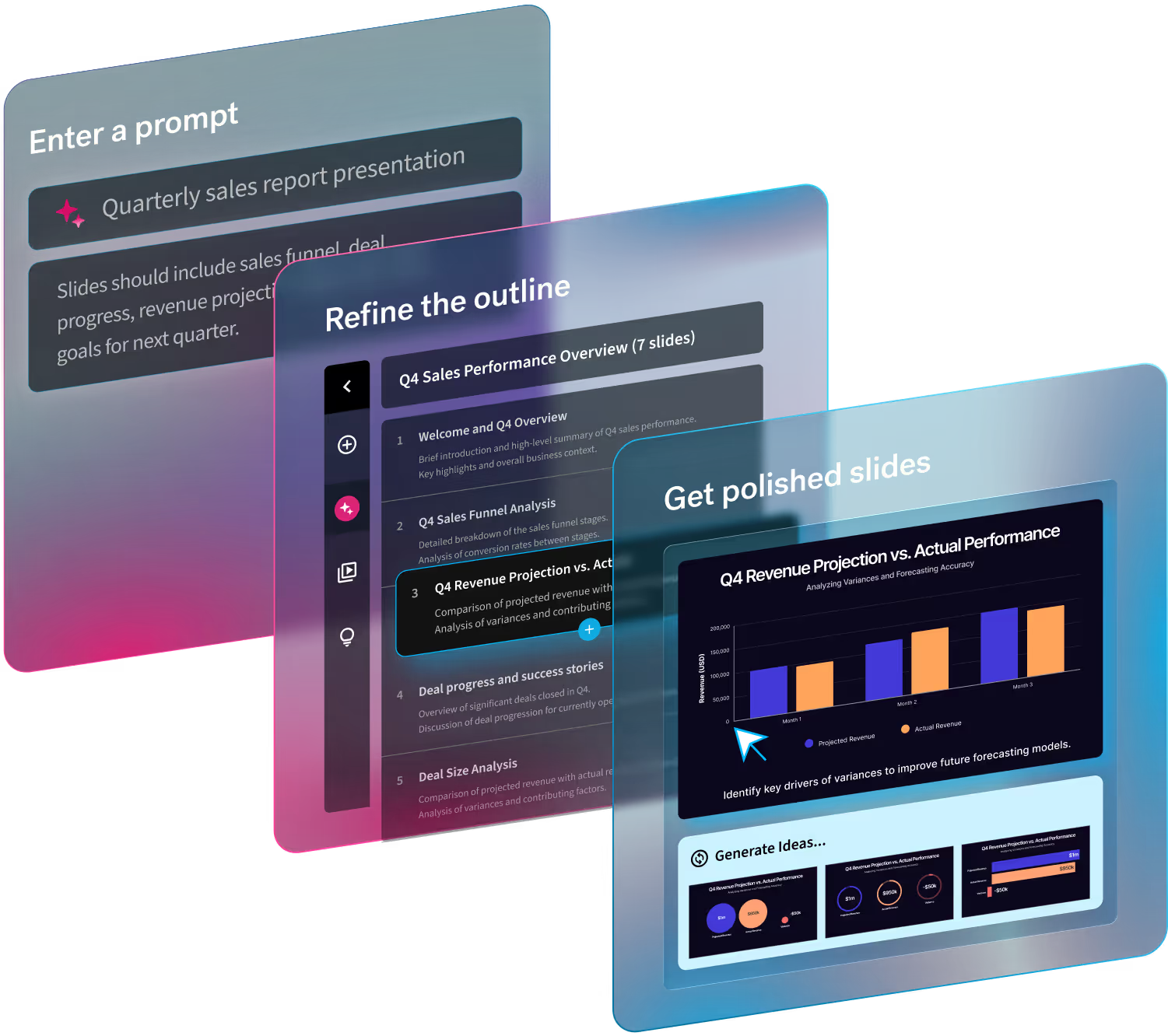
That meant making outlines more visible and editable, improving how we interpret prompts, and creating a system that can respond differently depending on whether the user enters a topic, pastes in an outline, or uploads a document. The goal was not just to generate slides, but to better understand the form of the user’s input and respond appropriately.
Built for the way people actually create
This release reflects a broader belief we have about where AI works best in presentations.
We do not think the ideal presentation experience is typing one giant prompt and getting a perfect finished deck back. In practice, presentations are too nuanced for that. A presentation is not one thing. It is a collection of slides, ideas, visuals, data points, and decisions that need to work together as a story.
That makes presentation creation different from generating a paragraph, an image, or an email.
In my opinion, good AI does not replace that process. It accelerates it. It helps you get started faster, gives you better options, and reduces the manual work required to move from idea to draft. But the user still needs control. They still need to shape the story, refine the slides, and make judgment calls the AI cannot.
That is why this release leans into collaboration rather than full automation.
Instead of assuming AI should make every creative decision, we built a workflow that gives users more visibility, more control, and more choice. If a slide prompt could be interpreted in different ways, the system can now generate multiple directions instead of forcing a single result. That gives users a faster path to something that feels right, while keeping them in control of the final outcome.
For us, that balance matters. AI should act as a partner, not a replacement for thinking.
Faster, smarter, and more aligned with real workflow
One of the biggest mistakes companies make right now is treating AI like a magic trick. They focus on novelty instead of workflow. They build experiences that feel impressive in a demo but frustrating in real use.
The reality is that most users are not looking for AI for its own sake. They want speed, clarity, and results that feel aligned with what they asked for.
That is also why speed matters so much.
Anyone who has worked with AI knows the first result is often not the final result. You generate, review, revise, and try again. If every cycle takes too long, the experience quickly becomes frustrating. In presentations, that friction compounds because you are not working on one output. You are working across an entire deck.
We wanted to make that iteration loop dramatically faster.
The best AI products are starting to feel less like isolated tools and more like natural extensions of how people already work. In our category, that means supporting the real workflow of presentation creation: building an outline, refining the narrative, generating slide directions, adjusting individual slides, and moving quickly between idea and execution.
It also means being thoughtful about quality. There is a growing backlash against generic AI content, and for good reason. People are increasingly sensitive to what feels lazy, repetitive, or off-brand. We are very aware of that. Our goal is not to flood users with generic output. It is to help them create presentations that are faster to make, but still intentional, useful, and aligned with how they want to communicate.
What this means for users
For users, the biggest change is that the workflow is more flexible and more responsive to how they already create.
If you have a topic, we can help you build from that. If you already have an outline, you can bring it in and work from it directly. If you have a document, we can help turn it into a presentation structure. And once you are in the workflow, you have more ways to guide the result at both the presentation level and the slide level.
That means better comprehension of what you are asking for, more control over how the presentation takes shape, and a faster path from idea to editable draft.
It also opens the door to richer use cases. Users can add context to specific slides, include source material like tables or documents, and make more targeted decisions earlier in the process. Instead of getting a one-size-fits-all output, they can steer the system toward what they actually need.
The outcome I am most excited about is helping people get started faster.
That sounds small, but it matters. Starting is often the hardest part of presentation creation. If AI can help users move from a rough idea, outline, or document into a strong first draft more quickly, then it creates momentum. And once that momentum exists, the whole process becomes easier.
What’s next
AI is changing too quickly for anyone to predict exactly where presentation workflows will be in five years, or even five months. What I do know is that user expectations will keep rising, and we need to keep refining the product around how people actually work.
For us, that means continuing to improve quality, speed, and control. It means thinking carefully about how AI can support business and team use cases, not just one-off presentation generation. And it means staying focused on what has always mattered at Beautiful.ai: helping people communicate clearly, effectively, and on-brand.
This release is one step in that direction.
The opportunity ahead is not just to generate more slides. It is to build better workflows for turning ideas into presentations people are proud to share.



.avif)
.avif)


