


Prezi vs Gamma: which is better?
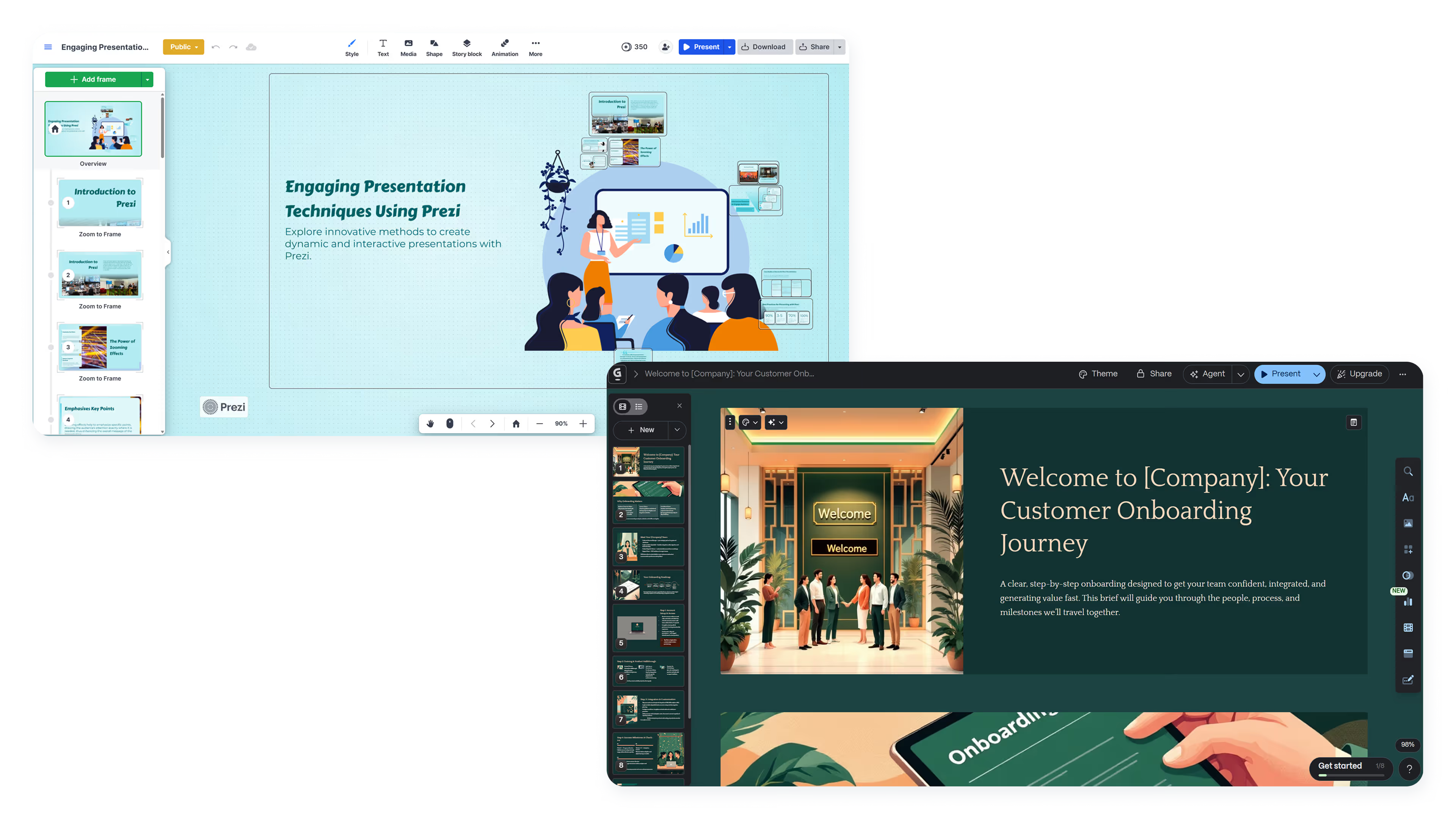

Prezi vs Gamma: which is better?
Choosing between Prezi and Gamma often comes down to one question: do you want a proven canvas-based platform built for live, visual storytelling, or a newer AI-driven tool designed for fast content generation? Both are popular AI tools and cloud-based presentation software, but they serve different workflows and presentation styles.
Prezi is a mature presentation software known for its non-linear, zooming interface that lets presenters move fluidly across a visual canvas. Gamma, by contrast, is an AI presentation tool built around generative AI and rapid content creation, turning prompts into polished slide decks within minutes. Prezi excels at live delivery and audience engagement; Gamma excels at speed and automation.
This guide compares both platforms across ease of use, templates, AI features, collaboration tools, pricing, and ideal use cases. Whether you need dynamic presentations for live audiences or AI-generated layouts for fast turnarounds, the breakdown below will help you decide which tool fits your workflow.
Tool overviews
What is Prezi?
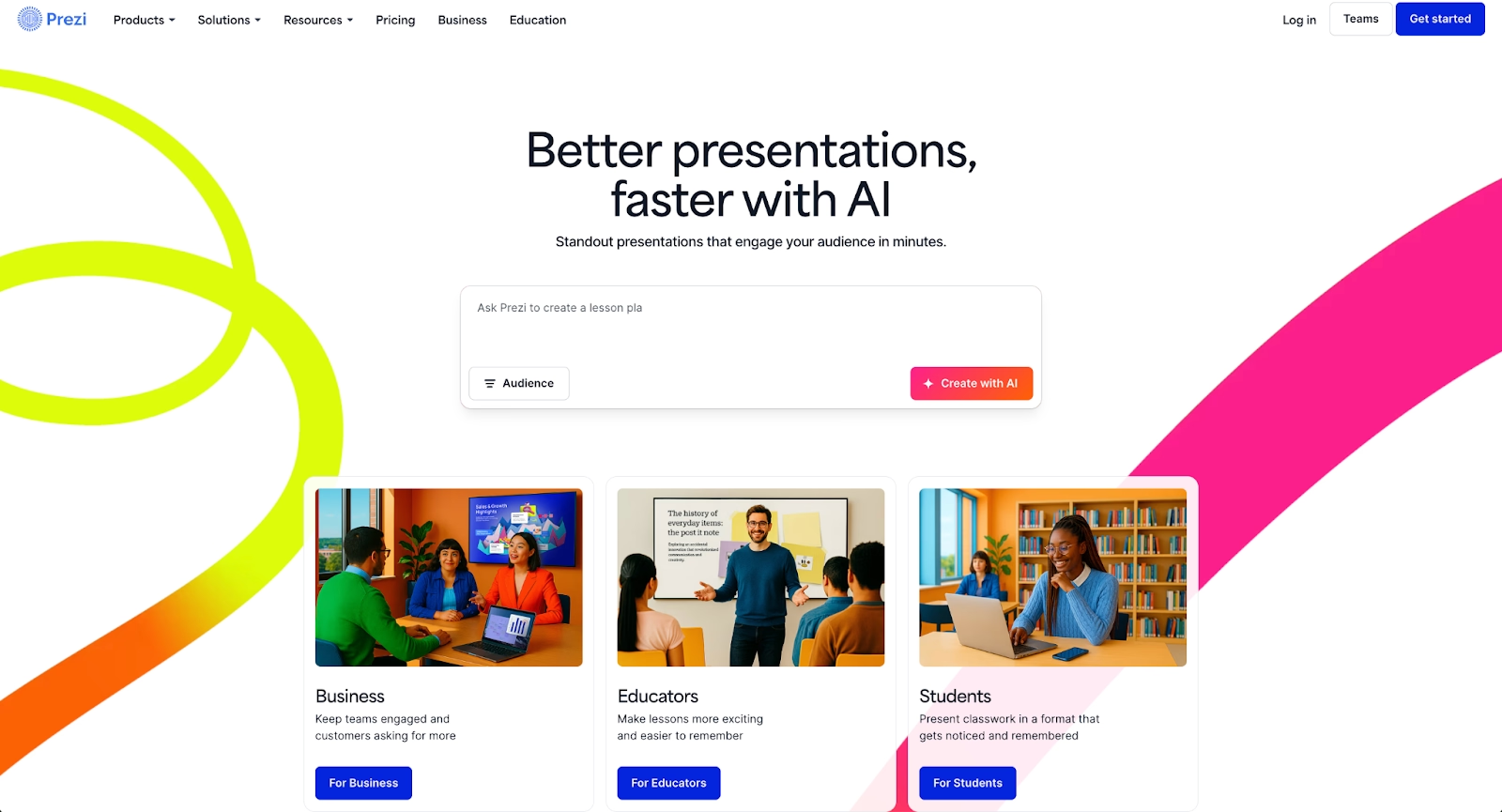
Prezi is a presentation platform built around non-linear presentations and visual storytelling. Instead of moving slide-by-slide like traditional presentation software, presenters navigate a single canvas using zoom transitions that reveal relationships between ideas. This approach makes Prezi popular among educators, speakers, and facilitators who prioritize audience engagement over rigid structure.
Prezi offers a unique zooming interface that creates dynamic presentations distinct from PowerPoint or Google Slides. Recent updates include Prezi AI, which helps users generate outlines and AI-assisted content. The platform supports real-time collaboration and integrates video features for hybrid and remote presenting, positioning itself as a presentation-plus-video tool for live communication.
What is Gamma?
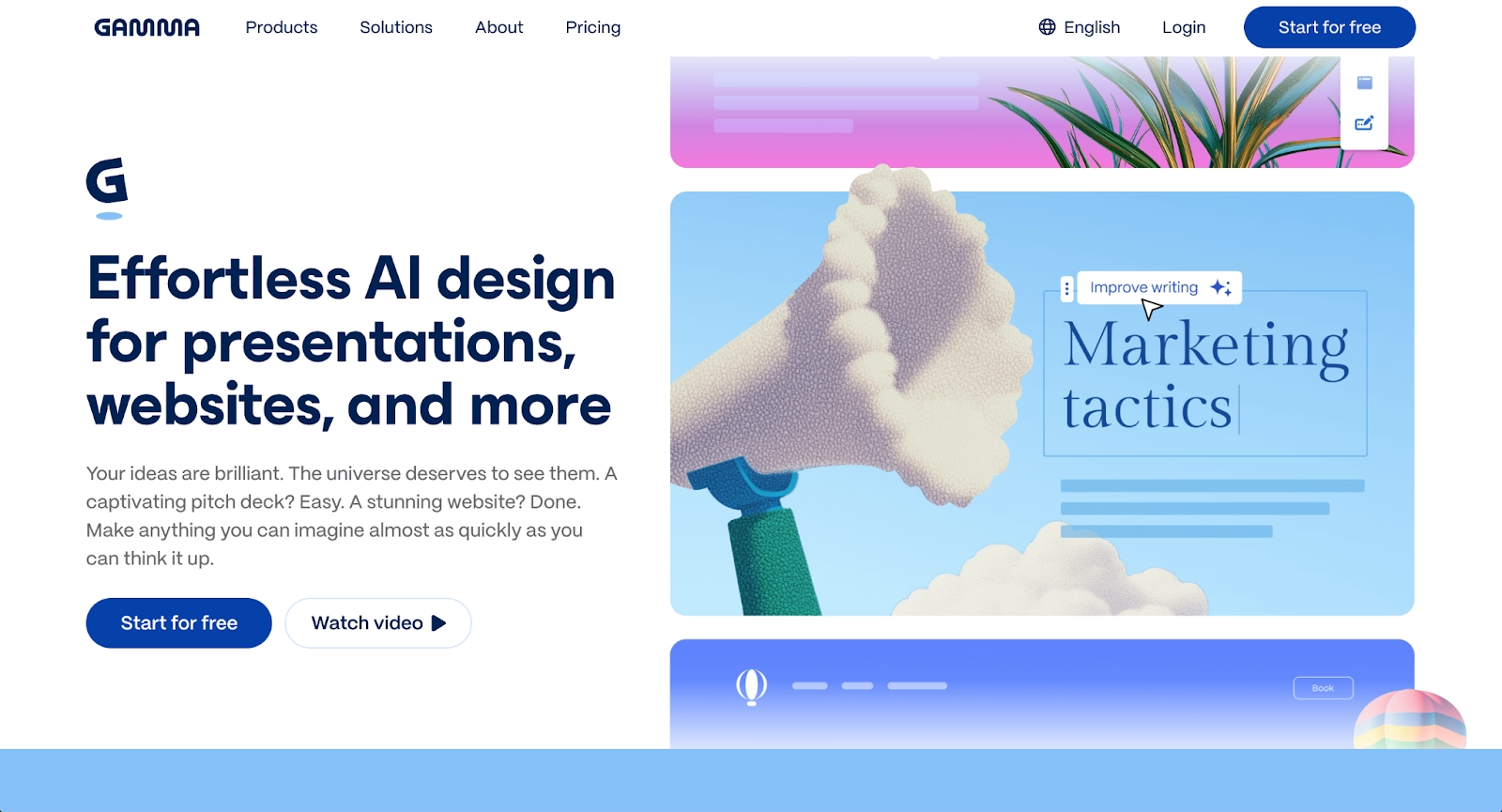
Gamma is a newer AI presentation tool designed for speed and automation. Built around generative AI, the Gamma app turns text prompts into polished presentations, documents, and web pages within minutes. The platform has seen rapid adoption among teams looking for AI-first presentation creation. The platform uses a card-based format rather than traditional slides, creating a scrollable, web-native experience that feels modern and responsive.
Gamma AI excels at content generation, handling layouts, text, and images automatically based on user input. The tool appeals to startups, consultants, and marketers who need fast deck creation without spending hours on design. While Gamma offers customization options, its core value lies in AI-driven automation rather than manual design control.
Key comparison criteria
The core difference between Prezi and Gamma lies in their underlying philosophy: Prezi prioritizes visual storytelling and live presentation delivery through spatial navigation and zoom animations, while Gamma prioritizes speed and AI automation, letting users skip the blank page and generate content-ready decks from prompts. One tool rewards creative exploration; the other rewards efficiency.
Ease of use & learning curve
Prezi has a steeper learning curve compared to traditional presentation tools. Building effective non-linear presentation paths requires spatial thinking and planning. Users accustomed to PowerPoint or Google Slides may need time to adapt to Prezi's canvas-based workspace. Once learned, the zooming interface enables highly engaging presentations, but the initial adjustment period can slow down new users.
Gamma takes the opposite approach, prioritizing ease of use and fast onboarding. The AI-assisted workflow means those who use Gamma can generate a complete deck by entering a prompt, skipping the manual layout process entirely. Teams that use Gamma regularly appreciate the streamlined user experience, though users seeking precise control over formatting may find the automated approach limiting.
For teams that want polished presentations without extensive learning curves, AI-powered presentation makers offer an alternative path that balances automation with design control.
Summary: Prezi favors users who invest time in learning spatial navigation; Gamma favors users who want immediate results with minimal setup.
Templates & format control
Prezi does not rely on traditional templates in the same way as slide-based tools. Instead, it offers thematic canvases designed for visual storytelling, where content is placed spatially and connected through transitions. This gives presenters creative freedom to build non-linear narratives, but it also means less rigid format control compared to structured slide layouts.
Gamma provides customizable templates and AI-generated layouts that adapt to user content. The card-based format creates consistency across presentations, though the emphasis is on speed rather than pixel-perfect design precision. Users can adjust fonts, colors, and styling, but Gamma's automation prioritizes fast assembly over granular customization options.
Teams that need consistent branding across many presentations often benefit from tools with brand controls and themes that enforce visual standards automatically.
Summary: Prezi excels at freeform visual design; Gamma prioritizes fast, AI-generated templates over detailed format control.
For teams looking at alternatives to PowerPoint, both Prezi and Gamma offer distinct approaches worth considering.
AI features & automation
Both platforms have introduced AI capabilities, but they apply them differently.
Prezi AI helps users generate outlines, structure ideas, and create starting points for presentations. The AI assists with content organization and narrative flow rather than continuous layout control. Prezi's AI features support visual storytelling and audience engagement, helping presenters build more coherent narratives without automating the design process itself.
Gamma AI sits at the core of the product. Users enter prompts, and generative AI creates complete presentations including text, layouts, and suggested images. Content generation happens automatically, making Gamma one of the faster AI presentation tools for producing first drafts. The trade-off is less manual control over how AI interprets and structures content.
For teams exploring AI tools for presentation creation, seeing how AI transforms text into slides provides useful context on what automation can and cannot deliver.
Summary: Prezi uses AI to support narrative structure; Gamma uses AI to automate entire presentation creation.
Design tools, visuals & data visualization
Prezi's design strength lies in motion and spatial relationships. The zooming interface creates dynamic presentations that reveal information progressively, making complex topics more digestible. Multimedia support includes video, images, and embedded content. Data visualization exists but is secondary to Prezi's focus on movement and visual storytelling.
Gamma supports visuals, multimedia, and basic charts, but data visualization is not its primary focus. The card-based format works well for content-heavy presentations and web pages, though users needing advanced data dashboards or precise chart formatting may find the functionality limited compared to dedicated visualization tools.
Teams with heavy data requirements often benefit from presentation tools with stronger data visualization capabilities that handle charts, graphs, and dashboards automatically.
Summary: Prezi excels at dynamic visual motion; Gamma excels at fast content assembly with moderate visual support.
Interactive elements & audience engagement
Prezi is built around live audience engagement. Its non-linear navigation, zoom transitions, and animations keep presenters in control of pacing and emphasis during delivery. The zooming interface creates a presentation style that feels conversational rather than scripted, making it effective for education, training, and storytelling scenarios where maintaining attention matters.
Gamma's interactivity is more asynchronous. The card-based format works well for web-native sharing and embedded content, but it does not offer the same live presentation features as Prezi. Gamma presentations are often consumed via shared links rather than delivered in person, which shifts the focus from real-time engagement to content consumption.
For teams that need to track how audiences interact with shared presentations, viewer analytics can provide insights into engagement patterns and follow-up timing.
Summary: Prezi delivers live, presentation-first engagement through motion and zoom; Gamma supports web-based sharing and asynchronous viewing. Teams creating quarterly marketing reports may prefer more structured formats.
Collaboration features & real-time workflow
Prezi supports real-time collaboration, allowing multiple users to edit and comment simultaneously. This is particularly useful for teams preparing live presentations together. The platform includes permissions, presenter roles, and video integration features that support distributed teams working on shared content.
Gamma also offers real-time collaboration with commenting, sharing, and team workspace features. Users can invite collaborators to edit presentations and provide feedback. Collaboration tools are functional, though Gamma's focus remains on individual content creation speed rather than complex team workflows.
Teams managing multiple collaborators across departments often need presentation workflows and tips for automating weekly reports that include version control, locked slides, and permission management to maintain consistency.
Summary: Both support real-time collaboration; Prezi emphasizes live presenting workflows, while Gamma emphasizes fast individual creation with team input.
Compatibility & integrations
Prezi integrates with PowerPoint, supports embedding, and works across devices including desktop and mobile environments. The platform is optimized for live delivery rather than static exports. API integrations allow for custom workflows, and PDF and video exports are available. Prezi presentations deliver the best experience within the native Prezi player.
Gamma's primary output is a web link, though PDF and PPTX exports are available. Exporting to PowerPoint may result in formatting issues, as Gamma's card-based format does not translate perfectly to traditional slide layouts. Gamma integrates with common tools and supports embedding content on websites and platforms.
For teams that require clean PowerPoint exports for stakeholders, knowing the differences between presentation tools helps set realistic expectations about cross-platform compatibility.
Summary: Prezi fits live presentation environments; Gamma fits web-native sharing with limited PowerPoint fidelity.
Pricing & free plan
Prezi offers a free version suitable for public presentations with branding limitations. Paid plans unlock privacy controls, advanced features, collaboration tools, and Prezi AI capabilities. Pricing scales based on individual, team, and business needs. The free plan provides enough functionality to evaluate the zooming interface before committing.
Gamma operates on a freemium model with initial credits for AI generation. The free plan allows users to create presentations with Gamma AI, though credits are limited. Paid tiers, including Plus and Pro subscriptions, unlock unlimited AI generation and advanced features. Pricing is competitive for individual users and small teams.
Both tools offer accessible entry points, though teams should evaluate how pricing scales as usage increases and whether the free version meets their presentation needs.
Summary: Both offer a free plan; Prezi's free tier suits public presentations, while Gamma's free tier suits trying AI-driven content generation.
Ideal use cases
Prezi and Gamma serve distinct presentation styles and workflows, with Prezi rewarding users who invest in learning its zooming interface for live storytelling, and Gamma rewarding users who want AI-powered tools to handle content generation automatically. For teams that need a middle path, Beautiful.ai often becomes a stronger fit. As a Gamma alternative, it offers consistent design and scalable workflows without the complexity of spatial navigation or card-based formatting limitations.
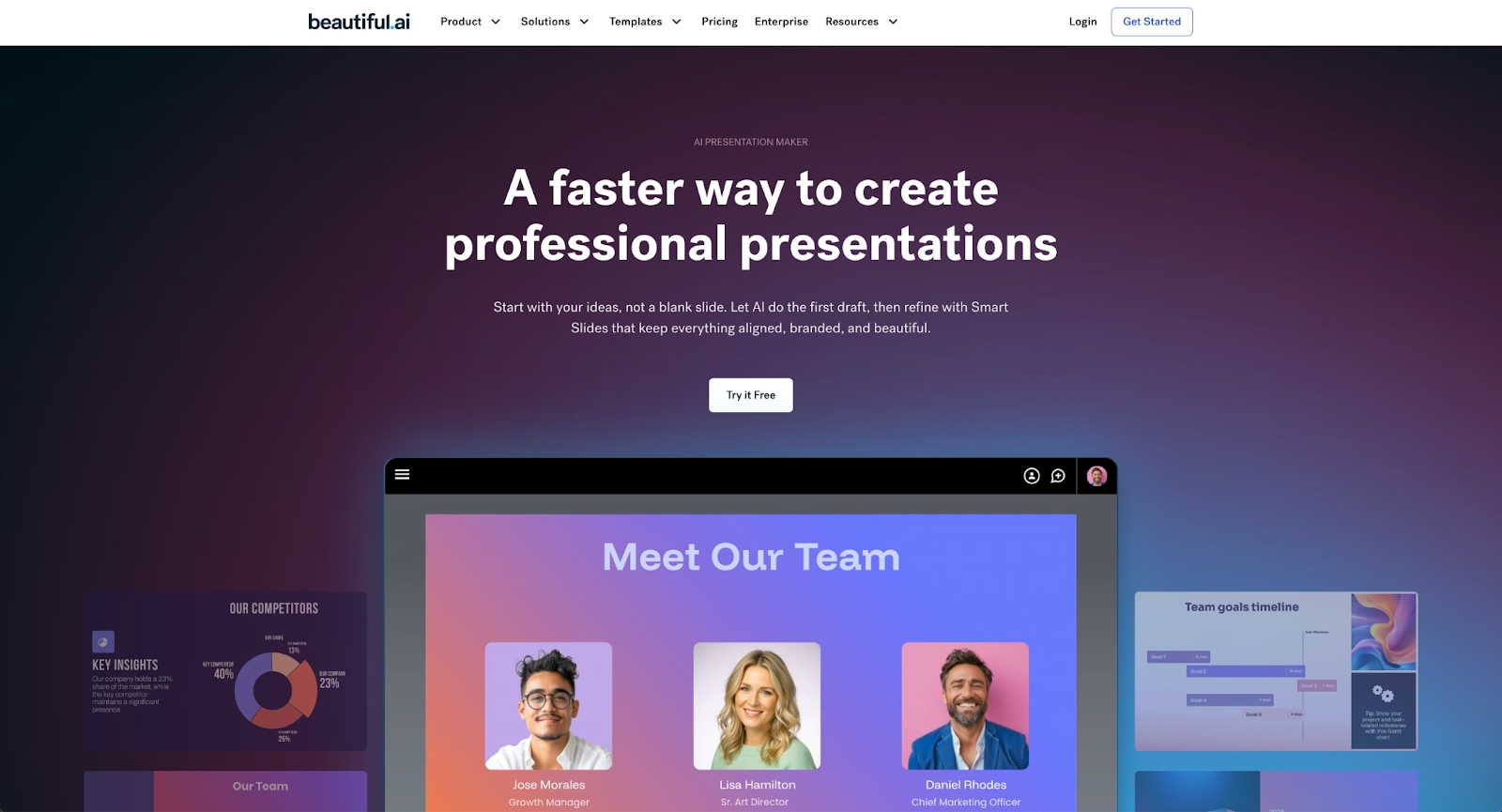
When Beautiful.ai is the better fit
- Teams that need on-brand, professional slide decks without manual formatting or spatial design complexity.
- Organizations producing recurring pitch decks, sales presentations, and executive updates at scale.
- Users who want AI to kickstart ideas from a prompt while maintaining full control over final design.
- Teams that require clean PowerPoint exports for stakeholders who expect traditional slide formats.
- Businesses that need Smart Slides with auto-aligning layouts and built-in design logic.
When Prezi is the better fit
- Presenters who want engaging, non-linear presentations that go beyond traditional slides.
- Educators, speakers, and trainers who rely on visual storytelling and live audience engagement.
- Users comfortable learning spatial navigation and investing time in learning the canvas format.
- Teams that benefit from zoom transitions and animations to reveal relationships between ideas.
- Organizations focused on live delivery rather than static document sharing.
When Gamma is the better fit
- Users who need fast deck creation and want AI to generate content automatically from prompts.
- Startups and consultants producing pitch decks under tight deadlines (see examples of successful pitch decks for reference).
- Teams that prefer web-native, card-based presentations over traditional slide formats.
- Users who want to use Gamma's generative AI and ai-powered tools for content creation and willing to trade customization for speed.
- Individuals who prioritize low learning curves and immediate output over design precision.
Limitations and trade-offs
Every presentation tool reflects deliberate design choices that create trade-offs. Knowing where each platform prioritizes functionality, automation, or creative freedom helps set realistic expectations about what works well and where compromises are inevitable.
Beautiful.ai trade-offs
- Less creative freedom than freeform canvas tools like Prezi.
- Does not offer native audience interaction features like polls or live quizzes.
- Presentation style is more linear compared to Prezi's non-linear storytelling approach.
- Offers a 14-day free trial but no permanent free plan for casual use.
Prezi trade-offs
- Steeper learning curve for users accustomed to PowerPoint or slide-based editors.
- Limited precision for data-heavy layouts and detailed charts.
- Non-linear format may feel unfamiliar in formal boardroom settings.
- Best experienced within Prezi; exports to other formats lose interactive functionality.
Gamma trade-offs
- Card-based format limits precise layout control for traditional slide presentations.
- PowerPoint exports may have formatting issues due to web-native design.
- AI automation reduces manual customization options compared to design-focused tools.
- Less suited for live presenting compared to platforms built for in-person delivery.
Future roadmap & developing features
Product direction affects long-term fit, especially for teams evaluating tools they will use for years. Knowing where each platform is heading helps determine whether it will continue to meet changing presentation needs.
Beautiful.ai focus
Beautiful.ai continues to expand its AI-powered automation while strengthening team workflows and brand governance. The roadmap prioritizes Smart Slide capabilities, improved data visualization, and collaboration features including permissions, version control, and shared asset libraries. The long-term vision is to function as an always-on design assistant that handles formatting, layouts, and brand consistency automatically, letting teams focus on messaging rather than manual design work.
Prezi focus
Prezi's development emphasizes visual storytelling and live communication beyond traditional slide decks. Current improvements include stronger AI-assisted creation, enhanced video and hybrid meeting features, and refinements to motion and zoom controls. Prezi is positioning itself as a presentation-plus-video platform optimized for live, conversational, and non-linear communication.
Gamma focus
Gamma's roadmap centers on building out its advanced AI engine and content generation features. Future development focuses on deeper automation, improved collaboration tools, and broader integration support. Gamma is growing as an AI-first content platform designed to streamline presentation creation for users who prioritize speed over manual design control.
Final recommendation
Prezi and Gamma each serve specific presentation workflows well. Prezi is built for presenters who want engaging, non-linear visual storytelling with zoom transitions and live audience engagement. Gamma is built for users who want AI-driven automation and fast content generation without spending time on manual design.
For teams that need structured automation without the complexity of spatial navigation or the formatting limitations of card-based tools, Beautiful.ai offers a practical middle path. It removes manual design overhead while providing clean, professional slide decks that export reliably to PowerPoint, helping teams maintain narrative clarity while automating design. Smart Slides handle auto-alignment and formatting through built-in design logic (not AI), while AI kickstarts ideas from prompts when needed, and every AI-generated presentation is built with Smart Slides.
If your goal is to streamline presentation creation and design better presentation slides, maintain brand consistency, and produce polished slide decks with less friction, Beautiful.ai fits naturally into modern workflows where reliability and efficiency matter more than experimentation. For marketing teams in particular, evaluating presentation software with advanced AI and professional design capabilities helps ensure both speed and quality at scale.
Why customers are switching to Beautiful.ai
Beautiful.ai is an AI-powered presentation platform that helps teams create polished, on-brand slides in a fraction of the time, without design skills or manual formatting.
- Design automation built in. Whether you're building pitch decks, reports, or internal presentations, Beautiful.ai’s Smart Slides automatically format content so you never worry about spacing, alignment, or layout again. Add your content, and the design adjusts instantly.
- ️No design experience required. Create professional decks without touching text boxes or manually arranging elements. Choose from Smart Templates and let the AI handle layout decisions, visual hierarchy, and consistency across the entire deck.
- Branding? Already handled. Keep every slide on-brand with your fonts, colors, and logos applied automatically. Beautiful.ai ensures every team member creates presentations that look like they came from a dedicated design team—without extra work.
- Real-time collaboration & team controls. Collaborate directly on the same deck, leave comments, manage permissions, and maintain consistency across team presentations. Perfect for growing teams and cross-functional workflows.
- Faster workflows, fewer revisions. Jump from rough outline to polished presentation in minutes, not hours. Beautiful.ai reduces back-and-forth edits by enforcing on-brand design rules and helping you iterate faster with AI-assisted slide creation.
