


Slidebean vs Prezi: which is better?
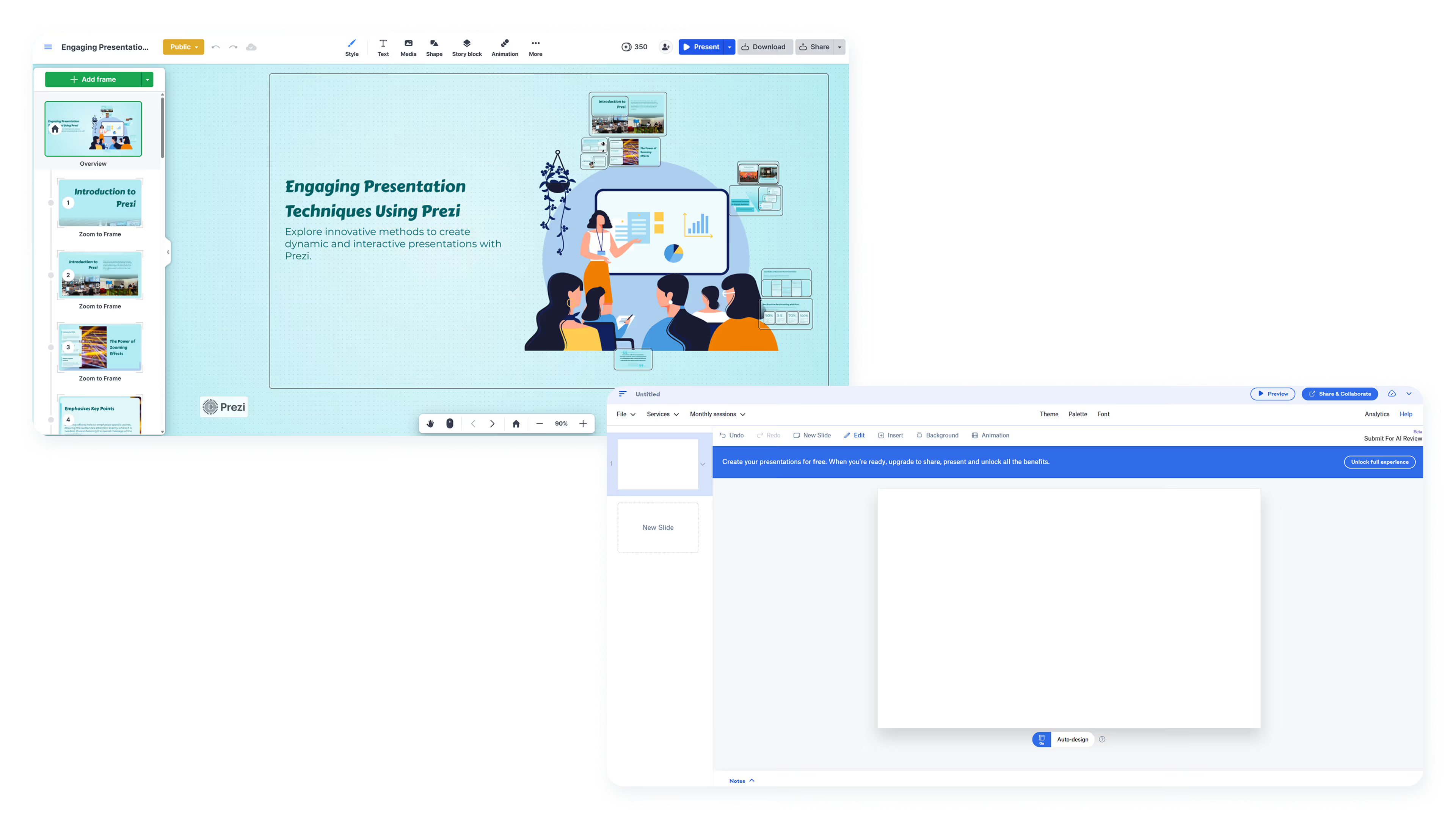

Slidebean vs Prezi: which is better?
Choosing between Slidebean and Prezi comes down to who you're presenting to and what kind of presentation experience you want to create. Both are cloud-based presentation software platforms, but they serve fundamentally different audiences and optimize for different outcomes. Reviews on G2 highlight these distinctions, with users rating each tool differently based on their specific presentation needs.
Slidebean is a pitch deck software built specifically for startups and small businesses preparing to raise funding. Its AI-powered automation handles slide design and layout so entrepreneurs can focus on their story and financials. Prezi, by contrast, is a visual storytelling platform built around non-linear presentations, using zoom-based transitions and spatial navigation to create memorable, engaging presentations for broader audiences. This guide compares the two tools across features, workflows, and pricing to help you determine which fits your presentation needs.
Tool overviews
What is Slidebean?

Slidebean is a cloud-based SaaS platform built specifically for startups and founders who need professional presentations to pitch investors. The platform combines AI-powered automation with curated pitch deck templates to help entrepreneurs create polished decks without design experience.
Slidebean offers more than just presentation software. The platform includes financial modeling tools, cap table management, and access to fundraising coaching through its Accelerate plan. This positions Slidebean as an all-in-one founder platform rather than a general-purpose presentation tool, making it particularly valuable for early-stage startups and small businesses preparing for seed rounds or Series A funding. According to Slidebean's own comparison, their focus is on "pitch deck development" rather than broad presentation use cases.
What is Prezi?
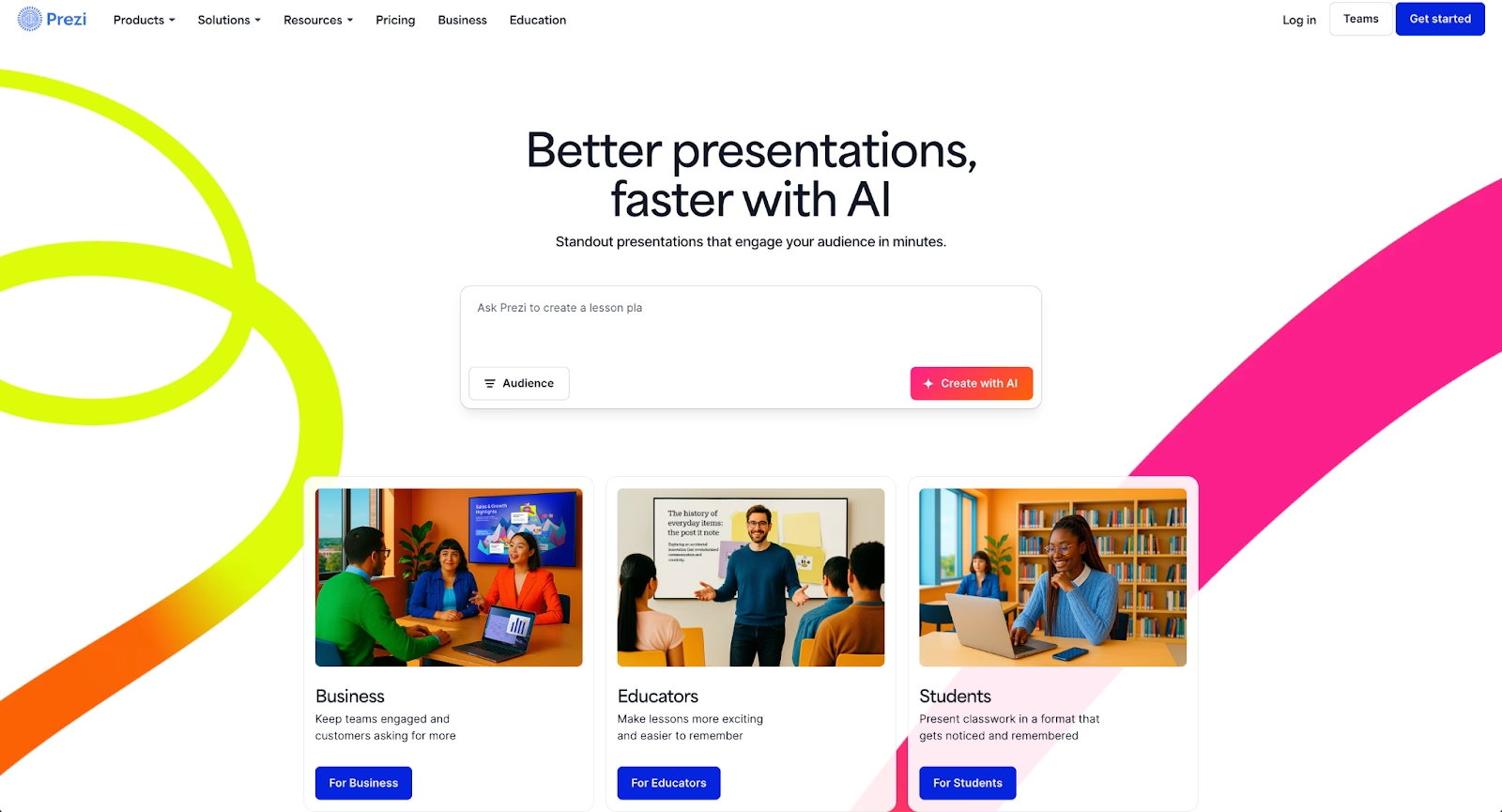
Prezi is a presentation platform built around non-linear, zoom-based presentations. Instead of traditional slides, presenters navigate a single canvas by zooming in and out of topics, creating a dynamic presentation style that emphasizes relationships between ideas and keeps audiences visually engaged.
Prezi is known for its distinctive animations, interactive elements, and immersive delivery format. Recent updates include Prezi AI for generating outlines and AI-generated content to help users get started faster. Prezi appeals to educators, speakers, and business professionals who prioritize audience engagement and memorable storytelling over traditional slide-based formats.
Key comparison criteria
At a strategic level, the difference is clear: Slidebean is a niche presentation tool optimized for startup fundraising and investor communications, while Prezi is a broad visual storytelling platform optimized for movement, narrative flow, and audience engagement across any context.
These priorities show up most clearly when comparing ease of use, templates, and how each platform approaches automation. For teams evaluating the best presentation software for their workflow, understanding these core differences is the first step. Other AI-powered tools like Gamma, Canva, and Visme also compete in this space, each with different strengths for creating high-quality slide decks, infographics, and visual content.
Ease of use & learning curve
Slidebean is designed for speed and simplicity. Its AI automatically arranges content into professionally designed layouts, which means users spend less time on formatting and more time refining their pitch. The drag-and-drop interface feels familiar to anyone who has used Google Slides or PowerPoint, but the automation handles most of the design decisions. For founders juggling fundraising alongside product development, this reduced learning curve is a significant advantage.
Prezi has a steeper learning curve, particularly for users accustomed to traditional slide-based editors. Building effective non-linear presentation paths requires spatial thinking and planning. The zoom-in and zoom-out transitions can create highly engaging presentations, but new users often struggle to balance motion with clarity. Overuse of zoom effects can also overwhelm audiences, which requires a practiced hand to avoid.
Summary: Slidebean favors speed and simplicity for pitch-focused work; Prezi favors expressive, dynamic delivery for broader storytelling.
Templates & format control
Slidebean provides a focused library of pitch deck templates designed for specific startup scenarios: seed funding, Series A, investor updates, and financial projections. These templates come pre-populated with guidance on what to include, making it easier for first-time founders to structure their story. The trade-off is that customization options are intentionally limited to keep presentations consistent and professional.
Research from TechCrunch and DocSend analyzing 320 pitch decks found that investors spend less than three minutes reviewing decks on average, making structured templates that front-load key information particularly valuable for fundraising.
Prezi does not rely on traditional presentation templates in the same way. Instead, it offers thematic canvases designed for visual storytelling, where content is placed spatially and connected through transitions. Users have significant creative freedom to design their own presentation flow, but this freedom comes with less structural guidance than template-based tools provide.
Summary: Slidebean excels at structured pitch deck templates; Prezi prioritizes fluid, non-linear design over fixed layouts.
AI features & automation
Both platforms have introduced AI tools, but they apply artificial intelligence in different ways.
Slidebean uses AI-powered automation as its core differentiator. The platform's algorithm evaluates slide designs to find optimal layouts quickly. Users can click through AI-generated arrangements until they find one that fits, eliminating the need for manual design work. The AI also powers deck reviews, helping founders identify weak points in their pitch before meeting investors.
Prezi applies AI assistance more directly to storytelling and presentation structure. With Prezi AI, users can generate outlines, structure ideas, and create AI-generated starting points for presentations. The AI focuses on helping users develop narrative flow rather than handling ongoing layout and formatting decisions.
Tools like Gamma have taken a different approach, using AI to generate entire presentations from prompts with a card-based interface that blurs the line between slides and docs. This positions Gamma as a middle ground between traditional slide decks and document-style content, appealing to users who want fast generation with flexible output formats.
Summary: Slidebean uses AI to automate slide design; Prezi uses AI to support narrative structure and content generation.
Design tools, visuals & data visualization
Slidebean offers clean, professional design tools optimized for pitch decks. Users can incorporate charts, graphs, and financial projections, with the platform handling visual formatting automatically. The focus is on clarity and credibility for investor audiences, not creative experimentation. Slidebean maintains consistent fonts and colors across slides to ensure a polished, cohesive look.
Prezi supports rich multimedia and visuals, but data visualization is not its core strength. The platform excels at motion and spatial storytelling, making it better suited for presentations that emphasize concepts and relationships than those heavy on metrics and financial data. Interactive maps and embedded content add engagement value for the right use cases.
Neither platform is built for creating infographics or detailed visual assets. Teams that need to produce infographics alongside presentations often turn to tools like Visme, Canva, or Gamma, which offer broader functionality for visual content creation across multiple formats.
Summary: Slidebean excels at clear, investor-ready data presentation; Prezi excels at dynamic visual motion and storytelling.
Interactive elements & audience engagement
Slidebean is optimized for asynchronous sharing rather than live interaction. Founders can share deck links with investors and track who views the presentation, how long they spend on each slide, and when they return. This analytics-first approach supports fundraising workflows where decks are often reviewed without the founder present. According to the DocSend Startup Index, investor viewing times have dropped significantly in recent years, making these engagement insights increasingly valuable for founders refining their pitch.
Prezi is built around live audience engagement. Its interactive elements, animated transitions, and non-linear navigation keep presenters in control of pacing and emphasis during delivery. The platform also supports video presentations and presenting over video calls, making it suitable for webinars, remote meetings, and hybrid events. Some presenters also repurpose Prezi content for social media clips, though the platform is not specifically designed for social media content creation.
Summary: Slidebean supports analytics-driven async sharing; Prezi delivers live, presentation-first engagement.
Collaboration features & real-time workflow
Slidebean's collaboration features are limited compared to broader presentation platforms. The tool is primarily designed for individual founders or small teams preparing a single pitch deck, not for large organizations managing multiple presentations simultaneously. Team workflows focus more on external review and coaching than on internal real-time editing.
Prezi supports real-time collaboration, allowing multiple users to edit and comment simultaneously. The Teams plan adds centralized billing, content control, brand kits, and Slack integration for organizations that need to manage presentations at scale. Permissions and folder management help larger teams organize their work.
For teams that need stronger collaboration functionality, platforms like Gamma, Pitch, and Beautiful.ai offer more robust real-time editing and team workflow features designed for organizations producing presentations across multiple departments.
Summary: Slidebean emphasizes external coaching and review; Prezi supports real-time team collaboration at scale.
Compatibility & integrations
Slidebean integrates with tools relevant to the startup fundraising workflow. Users can export presentations as PDFs, share via links, and track engagement through built-in analytics. The platform also connects with financial modeling and cap table tools, reinforcing its position as a founder-focused solution rather than a general-purpose presentation platform.
Prezi integrates with Microsoft PowerPoint, Google Slides, and Slack, and supports embedding across websites and platforms. The platform works across devices including desktop and Android, with offline access available on paid plans. Prezi is optimized for live delivery and video calls, though exports to PPT and PDF are available for stakeholders who prefer static formats.
Summary: Slidebean fits startup and investor workflows; Prezi fits broader presentation and live communication environments.
Pricing & free plan
Slidebean offers two primary plans. The Starter plan at $7 per month (billed yearly) provides access to the AI pitch deck builder, over 100 pitch deck templates, view tracking, cap table tools, and unlimited AI deck reviews. The Accelerate plan at $42 per month (billed yearly) adds strategy calls with the CEO, investor finder and CRM tools, financial modeling bootcamp access, and monthly sessions with pitch deck and financial modeling teams.
Prezi offers a free version with 500 AI credits, essential creation tools, and public content. The Standard plan at $7 per month adds privacy control, premium images, and advanced editing. The Plus plan at $19 per month unlocks unlimited AI generation, video presentations, PDF export, and offline access. The Premium plan at $29 per month adds presentation analytics, exclusive support, and advanced integrations. Teams pricing starts at $39 per user per month with centralized billing, brand kits, and collaboration features.
By comparison, Gamma offers a free version with limited AI credits and paid plans starting around $10 per month for unlimited generation. This positions Gamma as an affordable alternative for users who prioritize AI-powered content creation over specialized pitch deck functionality or live presentation features.
Summary: Both offer accessible entry points, but Slidebean bundles coaching and financial tools for startups, while Prezi scales from individual creators to enterprise teams.
Ideal use cases
While Slidebean and Prezi cater to distinct presentation needs, Slidebean leans toward pitch-focused efficiency for startups, and Prezi emphasizes live, non-linear storytelling for broader audiences. Some teams need more structure than freeform visual tools offer, but less theatrical motion than a presentation-first storytelling platform prioritizes.
In those scenarios, Beautiful.ai often becomes a stronger overall fit, particularly for organizations that value scalable workflows, consistent branding, and automated design rules over manual customization or niche use cases.
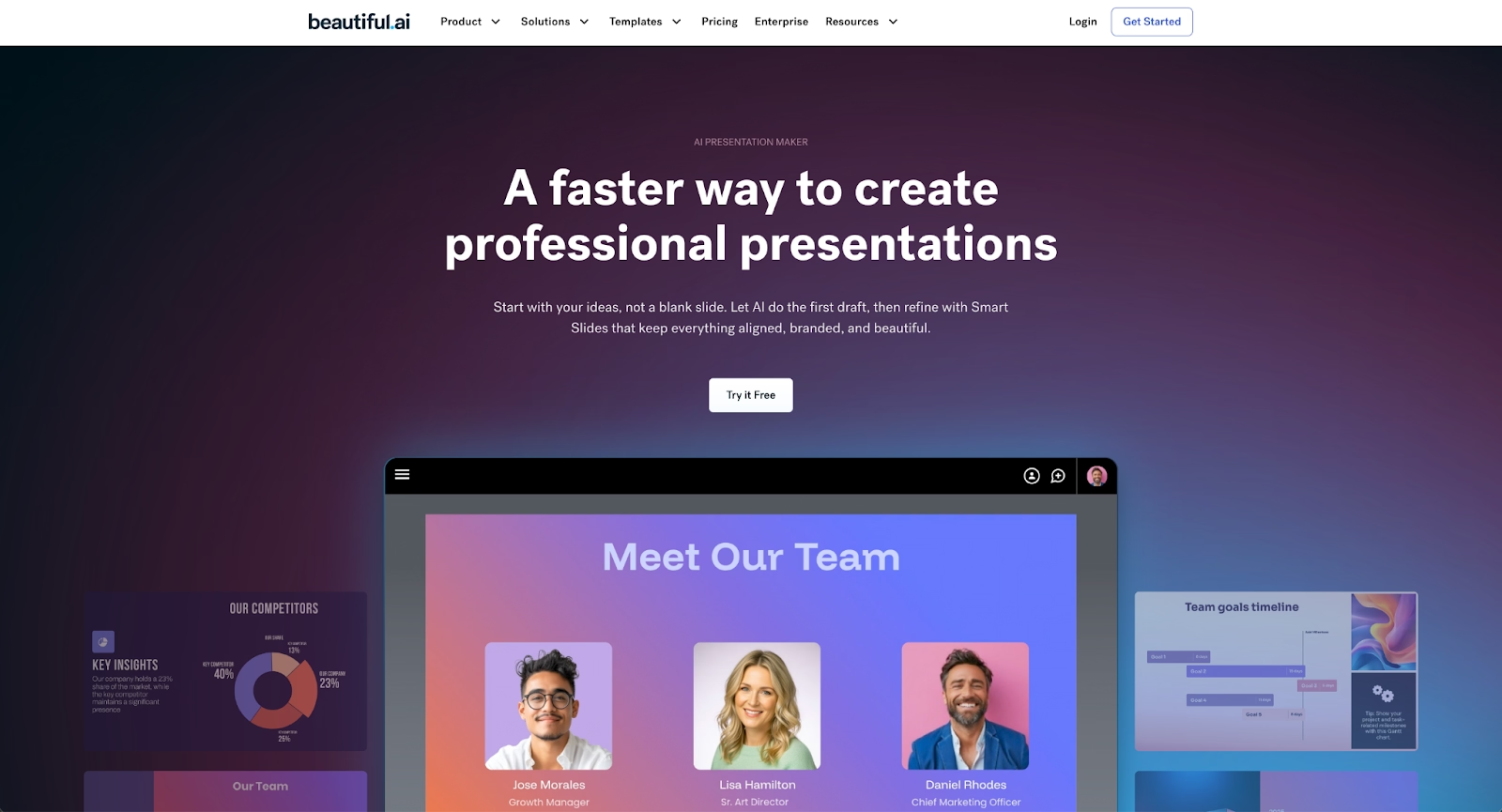
When Beautiful.ai is the better fit
- Teams that need on-brand, professional-looking slide decks without spending time on manual formatting.
- Organizations producing recurring pitch decks, sales presentations, and executive updates at scale.
- Users who want AI to kickstart presentations from a prompt, then refine with Smart Slides that auto-align and animate content.
- Teams that prefer a streamlined, all-in-one workflow rather than switching between specialized tools.
- Businesses that rely on clean, reliable PowerPoint exports and consistent outputs for stakeholders.
When Slidebean is the better fit
- Startup founders preparing to pitch investors for seed funding or Series A rounds.
- Entrepreneurs who need pitch deck templates with pre-populated guidance on structure and content.
- Founders who want AI-powered automation to handle slide design without learning new tools.
- Small businesses that benefit from integrated financial modeling and cap table management on one platform.
- Users who value view tracking analytics to understand how investors engage with shared decks.
When Prezi is the better fit
- Presenters who want engaging presentations that go beyond linear, traditional slide formats.
- Educators, speakers, and facilitators who rely on live delivery and audience engagement.
- Teams focused on visual storytelling, non-linear presentation paths, and dynamic zoom transitions.
- Users are creating webinars, video presentations, or hybrid meeting content.
- Organizations that benefit from real-time collaboration and team-wide brand management.
When Gamma is the better fit
- Users who want the fastest path from idea to high-quality presentation with AI-powered generation.
- Teams are creating docs, presentations, and web content from a single platform.
- Professionals who prefer a card-based, scrollable format over traditional slides.
- Small businesses and individuals who want a generous free version to test before committing.
- Users who value modern, web-native presentation formats for sharing and embedding.
Limitations and trade-offs
These tools reflect deliberate design trade-offs shaped by their underlying product philosophy. Understanding where each tool prioritizes focus, automation, or flexibility helps set realistic expectations about what they do well and where compromises are inevitable.
Beautiful.ai trade-offs
- Less creative freedom than full graphic design platforms like Canva or Visme.
- Does not offer native audience interaction features like polls or quizzes.
- Presentation style is more linear compared to Prezi's non-linear storytelling.
- No permanent free plan for casual or one-off presentation needs.
Slidebean trade-offs
- A narrow focus on pitch decks limits usefulness for general business presentations.
- Limited collaboration features compared to team-oriented platforms.
- Less customization flexibility than broader design tools.
- Accelerated plan pricing may be steep for very early-stage founders on tight budgets.
Prezi trade-offs
- Steeper learning curve for users accustomed to PowerPoint or Google Slides.
- Zoom effects can overwhelm or disorient audiences if overused.
- Less precision for data-heavy layouts, charts, and detailed financial presentations.
- Free version limits content to public visibility, which may not suit business use cases.
Gamma trade-offs
- A card-based format may not suit traditional boardroom or investor presentation expectations.
- PowerPoint exports can lose formatting and functionality.
- Less control over precise layouts compared to slide-based editors.
- Newer platform with a less established track record than legacy tools.
Future roadmap & evolving features
Looking beyond current features, the direction each platform is heading provides important context for long-term fit. Product roadmaps reveal whether a tool is doubling down on niche use cases, expanding into broader markets, or repositioning itself within the presentation ecosystem. Understanding these trajectories helps teams choose a platform that will continue to support their workflow as needs evolve.
Beautiful.ai focus:
Beautiful.ai combines two distinct capabilities: AI-powered content generation and Smart Slides design automation. The AI helps users kickstart presentations from a prompt, generating entire decks, individual slides, images, or text to skip the blank page. Smart Slides then handle the design work automatically, auto-aligning, resizing, and animating content as users edit, so teams focus on the message rather than formatting. The roadmap centers on expanding these capabilities alongside improved data visualization, collaboration features, and brand governance for teams.
Slidebean focus:
Slidebean's development centers on deepening its position as a founder platform. Ongoing improvements focus on AI pitch deck generation, expanded financial modeling capabilities, and investor-focused features like CRM integration and fundraising coaching. The platform is evolving toward a comprehensive startup toolkit rather than competing as a general presentation tool.
Prezi focus:
Prezi's roadmap prioritizes advancing visual storytelling and live communication. Ongoing improvements emphasize stronger AI-assisted creation, enhanced video and hybrid meeting features, and refinements to motion and zoom controls. Prezi is positioning itself as a presentation-plus-video platform optimized for live, conversational, and non-linear communication across education and business contexts.
Gamma focus:
Gamma continues to expand its AI-first approach to content creation. The roadmap emphasizes faster generation, improved design quality, and broader output formats including docs and web pages alongside traditional presentations. Gamma is positioning itself as a modern alternative to legacy presentation tools, appealing to users who prioritize speed and flexibility over traditional slide-based functionality.
Final recommendation
Slidebean and Prezi each excel in specific presentation contexts. Slidebean is well-suited for startup founders who need polished pitch decks with minimal design effort, integrated financial tools, and investor engagement tracking. Prezi stands out for presenters who prioritize motion, non-linear storytelling, and live audience engagement during talks, training sessions, or webinars. Gamma offers a compelling middle ground for users who want AI-powered generation with a modern, web-native format.
For teams that sit between those extremes, Beautiful.ai often emerges as the more practical long-term choice for creating the best presentation output consistently. It removes the manual design overhead found in traditional presentation tools while avoiding the narrow focus of pitch-specific platforms or the complexity of highly dynamic, non-linear formats. Smart Slides handle layout and formatting automatically as you work, while AI helps generate content when you need a starting point. The result is a faster, more consistent way to produce professional slide decks without sacrificing clarity or control.
If your goal is to streamline presentation creation, maintain brand consistency, and help teams move from idea to polished slides with less friction, Beautiful.ai offers a balanced approach that fits naturally into modern workflows.
Why customers are switching to Beautiful.ai
Beautiful.ai is an AI-powered presentation platform that helps teams create polished, on-brand slides in a fraction of the time, without design skills or manual formatting.
- Design automation built in. Whether you're building pitch decks, reports, or internal presentations, Beautiful.ai’s Smart Slides automatically format content so you never worry about spacing, alignment, or layout again. Add your content, and the design adjusts instantly.
- ️No design experience required. Create professional decks without touching text boxes or manually arranging elements. Choose from Smart Templates and let the AI handle layout decisions, visual hierarchy, and consistency across the entire deck.
- Branding? Already handled. Keep every slide on-brand with your fonts, colors, and logos applied automatically. Beautiful.ai ensures every team member creates presentations that look like they came from a dedicated design team—without extra work.
- Real-time collaboration & team controls. Collaborate directly on the same deck, leave comments, manage permissions, and maintain consistency across team presentations. Perfect for growing teams and cross-functional workflows.
- Faster workflows, fewer revisions. Jump from rough outline to polished presentation in minutes, not hours. Beautiful.ai reduces back-and-forth edits by enforcing on-brand design rules and helping you iterate faster with AI-assisted slide creation.
